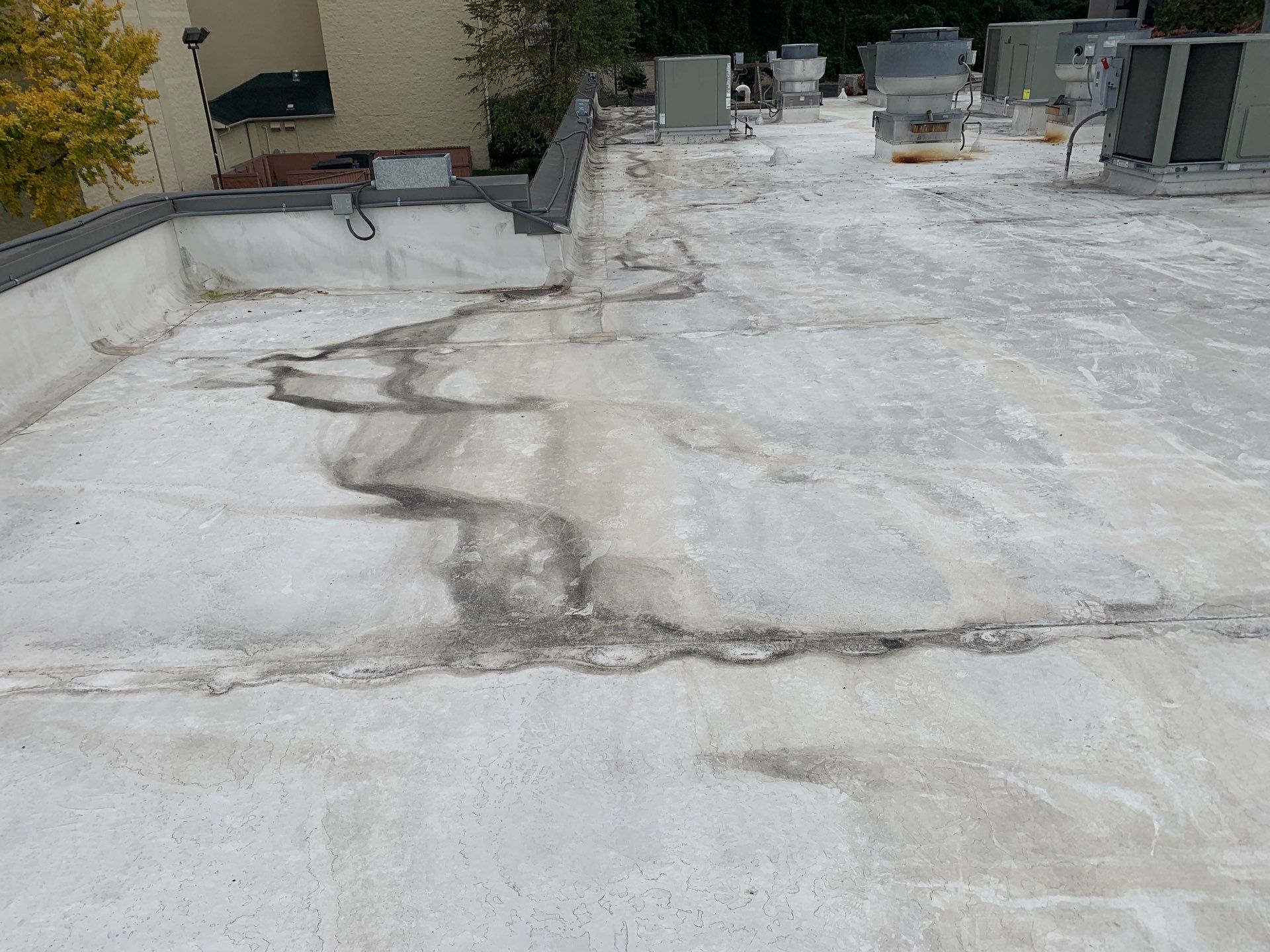
Omaha's severe weather season brings fast-moving thunderstorm lines and, on occasion, a derecho-type wind event that tracks straight-line wind damage across a wide swath of the metro in a single pass. Unlike hail, which tends to be localized to a storm track a few miles wide, a derecho can leave wind damage on commercial roofs from the I-680 corridor through downtown and out past Council Bluffs in the same afternoon. Wind claims on commercial low-slope roofs turn on a different set of documentation than hail claims — displacement and uplift rather than impact.
We're a roofing contractor, not a public adjuster. This page covers how we document wind and storm damage for an insurance claim. We don't file the claim or negotiate the settlement.
Omaha's Wind Exposure — Thunderstorm Lines and Derechos
Severe thunderstorm season in the Omaha metro runs primarily spring through summer, and the same weather pattern that produces hail also produces damaging straight-line winds — sometimes independently, sometimes from the same storm system. A derecho-type event is defined by widespread, long-track wind damage rather than a tornado's narrow path, which means a single event can affect commercial roofs across multiple business districts simultaneously — the Aksarben and Midtown Crossing corridors, the 180th Street retail belt, and the I-80 industrial buildings can all show storm-related roof damage from the same afternoon system.
What Wind Damage Looks Like on a Commercial Roof
Wind damage on a low-slope commercial membrane typically starts at the edges — parapet copings, edge metal, and the perimeter fastening zone are engineered to a lower wind-uplift resistance margin than the field of the roof, so that's usually where failure begins. Membrane laps that were properly welded or adhered can still separate under sustained uplift pressure if the perimeter fastening pattern was marginal to begin with. Rooftop equipment — HVAC units, vent stacks, exhaust housings — can shift on their curbs or have their flashing torn loose even when the membrane itself holds.
Documenting Wind Damage for a Claim
We document the displacement pattern zone by zone: which laps separated, which edge-metal sections lifted or detached, and which curb flashings show tear or displacement. We photograph the failure mode closely enough to distinguish an installation deficiency from weather-related failure — that distinction matters, because a claim adjuster needs to know whether the perimeter fastening met the original design wind-uplift rating or whether the event simply exceeded it. Where wind has driven water under the membrane at a lifted seam, we run moisture scans to document the extent of wet insulation separately from the membrane repair scope.
Membrane Uplift, Blow-Off, and Partial Loss Claims
A partial membrane blow-off — where a section of the roof has lifted or torn away entirely — is documented differently than localized seam separation. We measure and photograph the full extent of the exposed area, document the condition of the insulation and deck underneath (which is often wet or storm-debris-affected once the membrane is gone), and note whether the surrounding intact membrane needs to be re-terminated or replaced to tie into the new work under manufacturer warranty terms. A scope that only replaces the missing section without addressing the termination detail at its edges tends to fail again at the next wind event.
Coordinating with the Adjuster After a Wind Event
After a widespread wind event, adjuster scheduling backs up across the whole affected corridor — carriers are triaging active leaks and life-safety issues first. We can typically deploy emergency dry-in or temporary protection within 24 to 48 hours of a major event to stop active water intrusion while the full documentation and adjuster scheduling proceeds. When the adjuster is available for a site visit, we meet them on the roof and walk through the documented findings zone by zone.
Frequently asked questions
What's the difference between a hail claim and a wind claim on a commercial roof?
Hail claims document impact damage — dents, punctures, and granule loss at specific point locations. Wind claims document displacement — lifted or separated seams, detached edge metal, and torn flashing, usually concentrated at the roof perimeter and equipment curbs rather than scattered across the field.
Can straight-line winds damage a roof as badly as a tornado?
On a commercial low-slope roof, yes, particularly from a derecho-type event with sustained high wind over a wide area. Tornado damage is typically more concentrated and severe within a narrow path; straight-line wind damage is often less catastrophic per building but affects far more buildings across a wider area in a single event.
How fast can you respond after a wind event to stop active leaking?
We prioritize emergency dry-in and temporary protection after a major wind event, typically within 24 to 48 hours, to stop active water intrusion while the full damage assessment and insurance documentation is completed.
Do you document whether wind damage was pre-existing or storm-related?
Yes. We assess whether the perimeter fastening pattern and membrane condition were consistent with the original design wind-uplift rating, which helps establish whether a failure was storm-caused or attributable to an existing installation or maintenance issue.
What happens if only part of the roof membrane blew off?
We document the full extent of the exposed area, the condition of the insulation and deck underneath, and whether the surrounding intact membrane needs re-termination to tie into the repair under manufacturer warranty terms — a scope limited to just the missing section often leaves a termination detail that fails again.
Related Claims Pages
This page covers one type of loss. For the full commercial roof insurance claims process in Omaha — what documentation an adjuster needs, how the full-scope repair estimate gets built, and what to do with a denied or underpaid claim — see our commercial roof insurance claim assistance page.
Need Wind or Storm Damage Documentation for an Omaha Claim?
We document displacement, uplift, and blow-off damage to insurance-grade standards for commercial roofs across the Omaha metro.
Ready to talk through a roof?
Tell us about the building and the roof problem. We'll document it and put a plan in writing — with an honest repair-vs-replace recommendation and no upsell pressure.