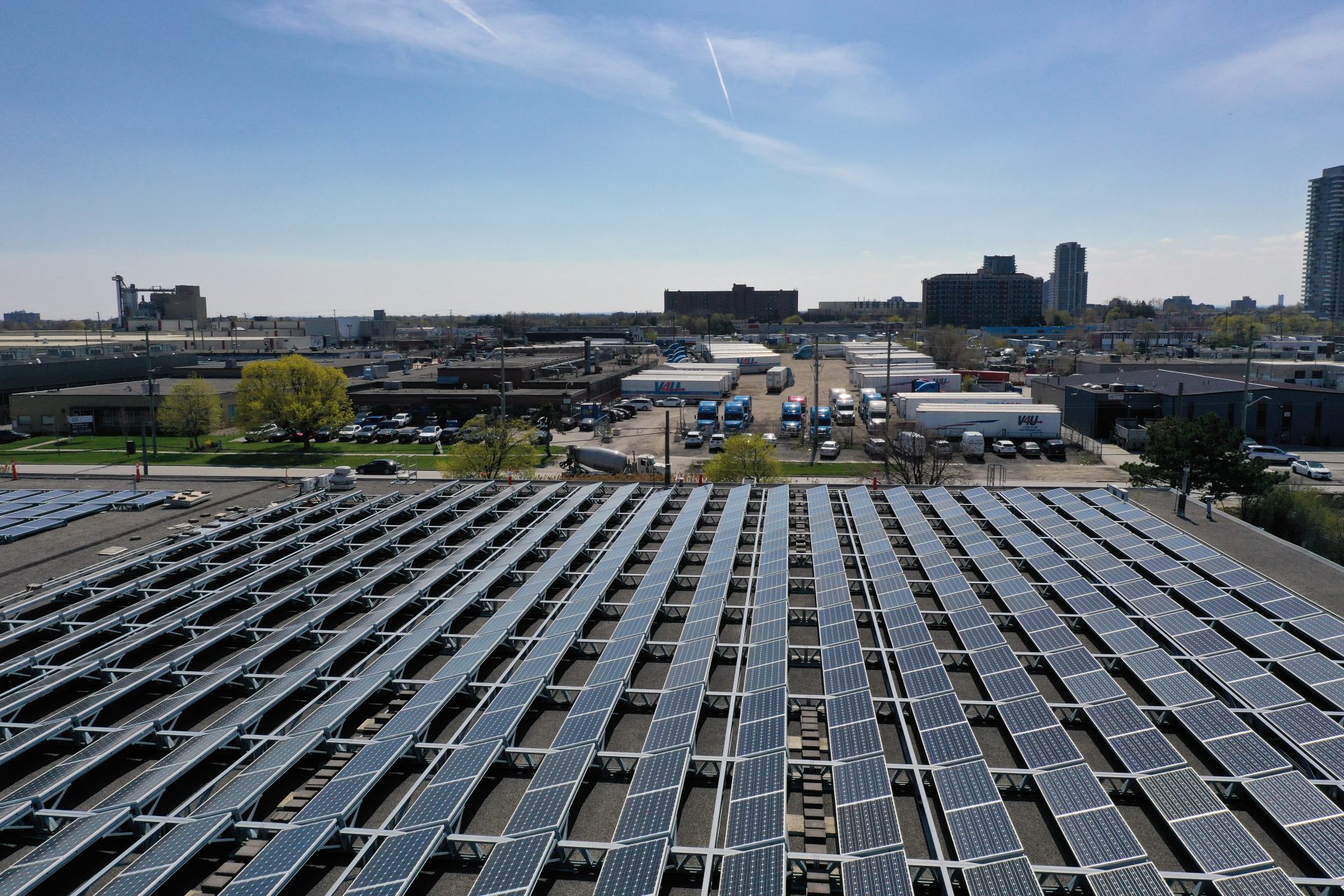
Nebraska sits inside what meteorologists call hail alley — the corridor running from Texas up through Colorado, Kansas, and Nebraska where hail-producing supercells form most often in the country. Douglas County sees measurable hail most springs, and commercial roofs along the I-80 warehouse corridor, the Dodge Street retail belt, and the South Omaha industrial district take the brunt of it. A hail claim on a commercial roof in Omaha isn't a rare event for us — it's a recurring part of the spring construction calendar.
We're a roofing contractor, not a public adjuster. This page covers how we document hail damage for an insurance claim — inspection, photography, and the written scope an adjuster needs. We don't file the claim or negotiate the settlement on the owner's behalf.
Why Omaha Sees So Much Hail
Spring hail tracks in the Omaha metro tend to move out of the southwest through Douglas County toward the Iowa border, driven by the same supercell thunderstorm pattern that produces hail across the Plains states every year from roughly April through June. Commercial roofs on large flat buildings — distribution centers, manufacturing plants, big-box retail — present a wide, mostly unobstructed target, which is why warehouse-heavy corridors like I-80 and I-680 tend to generate the highest volume of hail-related commercial claims after a significant storm.
What Counts as Documented Hail Damage
An insurance-grade hail inspection starts with a roof zone diagram, not a walkthrough. We divide the roof into labeled sections and photograph each one systematically, marking impact locations with a reference scale so an adjuster can estimate stone size from the photograph alone. On single-ply membranes we document impact depressions and any scrim fracture found on close inspection or probe test. On modified bitumen we document granule loss by zone and estimated coverage percentage. Metal components — coping, counterflashing, HVAC curbs, gutters — get photographed separately, since denting on soft metal is one of the clearest indicators of hail size and storm energy an adjuster can use to calibrate the rest of the claim.
The written report also has to separate storm-related damage from pre-existing wear. An older membrane that already had seam distress or UV degradation before the hail event needs that distinction noted explicitly — it protects the owner in a coverage dispute, and it keeps us from being asked to warranty repair work that was never storm damage to begin with.
Filing the Claim — Timing and Documentation Windows
Commercial hail damage isn't always visible immediately. A stone that dents a membrane without puncturing it can leave a fractured reinforcement scrim that doesn't fail until several freeze-thaw cycles later, sometimes a full season after the original storm. Most commercial property policies set a filing window measured from the date of loss, not the date the damage becomes visible — which is why we recommend a post-storm inspection even on roofs that look fine from the ground after a significant hail event. Getting an inspection on record close to the storm date gives the owner a documented baseline regardless of when a claim is ultimately filed.
Distinguishing Hail Damage from Membrane Wear
This is where most disputed hail claims get stuck. A 15-year-old membrane with UV-degraded seams can look similar to storm-damaged material to an untrained eye, and adjusters who don't specialize in commercial low-slope roofing sometimes miss the distinction in either direction — either attributing normal wear to the storm, or dismissing genuine impact damage as pre-existing condition. We document membrane age, prior maintenance record where available, and the specific physical signature of hail impact (circular depression pattern, scrim fracture, granule displacement) versus the diffuse pattern of UV wear. That written distinction is usually what resolves the dispute.
When Multiple Buildings Are Hit in One Storm
A single hail event can affect dozens of commercial properties across a corridor at once, and adjuster scheduling backs up fast in the weeks after a significant storm. Owners who get an independent inspection and documentation package on record early — rather than waiting for the carrier's first available inspection slot — tend to move through the claims process faster, because the adjuster arrives to a roof that's already been mapped and photographed rather than starting from zero.
Frequently asked questions
How quickly should I get a roof inspected after a hail storm in Omaha?
As soon as reasonably possible after the storm, even if the roof looks fine from the ground. Hail damage on a commercial membrane can be present without being visible at ground level, and documenting the roof close to the storm date establishes a baseline regardless of when a claim is eventually filed.
Can hail damage a commercial roof without leaving visible holes?
Yes. A stone that dents a single-ply membrane without puncturing it can still fracture the internal reinforcement scrim, and that latent damage often doesn't fail into an active leak until several freeze-thaw cycles later. This is one of the main reasons a documented inspection matters more than a visual check from the ground.
Do you provide the documentation adjusters need for hail claims?
Yes. Our hail inspection report includes zone-by-zone impact photography with reference markers, granule-loss or scrim-fracture findings depending on the membrane type, metal-component damage documentation, and a written assessment distinguishing storm-related damage from pre-existing wear.
What if the adjuster's inspection doesn't match what we found?
We can provide supplemental photography or a second joint roof walk to review specific findings side by side. We don't negotiate the claim outcome, but we'll stand behind our documented findings and provide whatever additional technical detail is needed to support them.
Is all hail damage covered by commercial property insurance?
Coverage depends on the specific policy and the carrier's determination of cause of loss — that's a question for the owner and their broker or carrier, not something we determine. What we provide is the physical documentation that establishes whether the damage pattern is consistent with hail impact.
Related Claims Pages
This page covers one type of loss. For the full commercial roof insurance claims process in Omaha — what documentation an adjuster needs, how the full-scope repair estimate gets built, and what to do with a denied or underpaid claim — see our commercial roof insurance claim assistance page.
Need Hail Damage Documentation for an Omaha Insurance Claim?
We inspect and document hail damage to insurance-grade standards for commercial roofs across Douglas County and the Omaha metro.
Ready to talk through a roof?
Tell us about the building and the roof problem. We'll document it and put a plan in writing — with an honest repair-vs-replace recommendation and no upsell pressure.