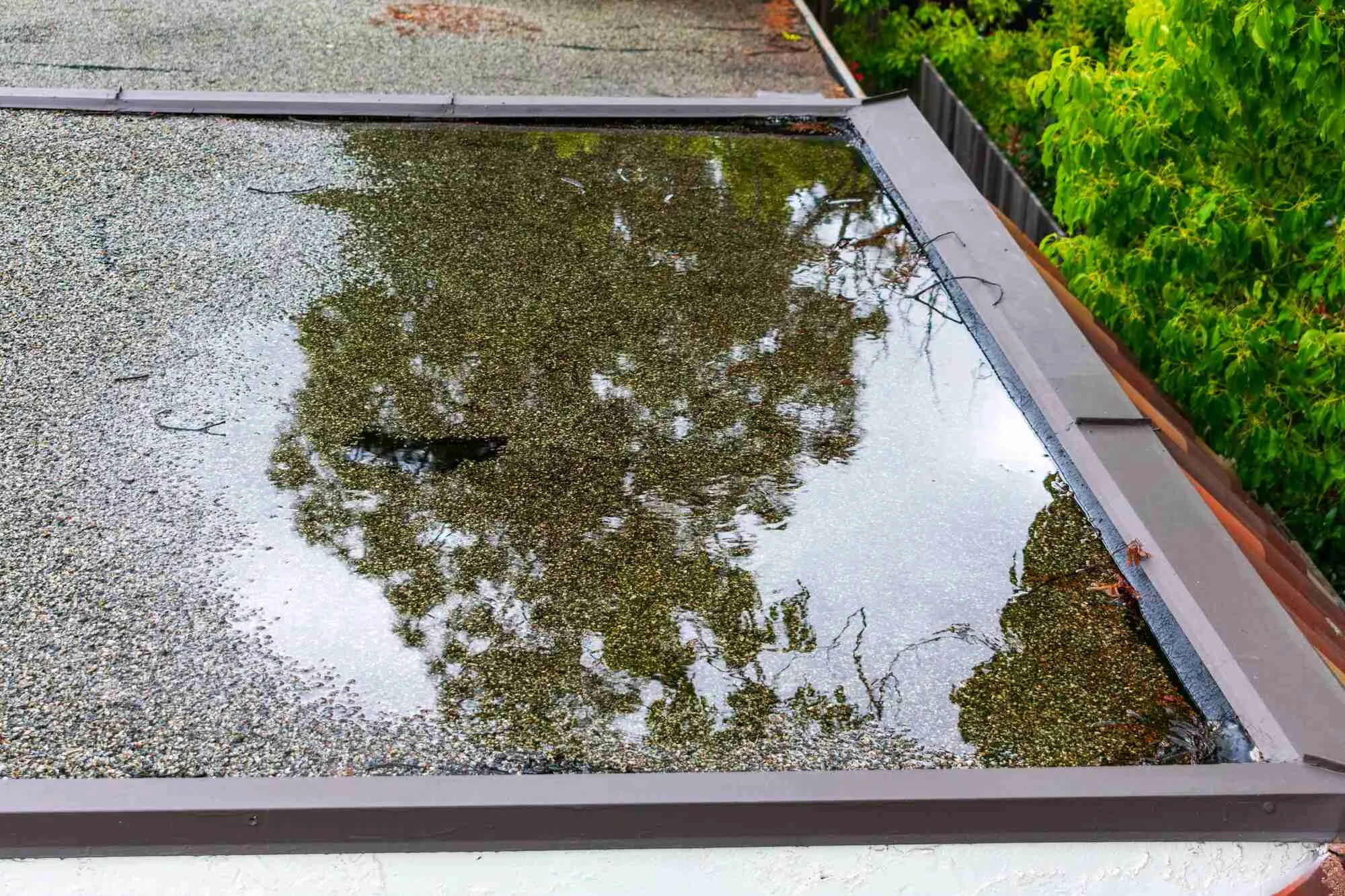
The Missouri River floods of 2011 and 2019 affected commercial buildings along Omaha's riverfront and in the low-lying North Omaha industrial corridor in ways that standard roof inspections did not capture. Water intrusion from below — through saturated ground, compromised foundation walls, and wall-to-roof transitions inundated by floodwater — does not look like a conventional roof leak.
The 2011 Missouri River flood was the largest flood event on the lower Missouri in modern history. Water crested at Omaha at levels not recorded since the 1950s, and the flood lasted for months — unlike a flash flood event, the 2011 flood maintained elevated water levels from June through September. Commercial buildings in the North Omaha riverfront zone, along Abbott Drive near Eppley Airfield, and across the river in Council Bluffs experienced sustained inundation of lower levels and wall assemblies.
The 2019 Missouri River flood — triggered by the March bomb cyclone that saturated the Missouri River basin — caused additional damage in many of the same areas. Buildings that had been repaired after 2011 experienced second events. Some building owners in the floodplain had improved their flood mitigation between 2011 and 2019; many had not.
What the Missouri River floods did to commercial roofs is not always intuitive. The roofs themselves — 20 feet above grade — were not inundated. But wall assemblies saturated by floodwater wicked moisture upward. Roof-to-wall transitions that were marginally detailed allowed flood water that had infiltrated the wall cavity to enter the roof assembly from below. Insulation in low-slope roofs on buildings in the flood zone was found saturated not from roof leaks but from vapor drive from the saturated building below. We assess buildings in the Missouri River floodplain specifically for these flood-related moisture pathways, not just for conventional roof leaks.
Flood-Related Moisture in Omaha Commercial Roofs
Wall-to-roof transition saturation: Where the roof membrane terminates at an exterior wall — at a parapet, at a mechanical room wall, at a building expansion — the transition flashing is typically designed for rain water running down the wall face, not for floodwater that has saturated the wall cavity from the outside. Floodwater in the wall cavity finds the transition flashing from the interior side and enters the roof assembly below the membrane. This failure mode is not visible on a standard roof walk — the membrane surface looks intact, but the insulation below it is wet. Moisture cores at wall terminations on every Missouri River floodplain building we inspect.
Vapor drive from below: A building whose lower levels were inundated for weeks or months carries an enormous moisture load in its floor slab, foundation walls, and framing. That moisture drives upward by vapor pressure through the building envelope. In winter, the vapor gradient is from warm-interior-wet to cold-exterior-dry — it drives toward the roof assembly. Omaha's winters are cold enough and long enough to drive significant vapor quantities into the roof insulation before the assembly can dry. We have found ISO insulation at 30-40% moisture content by weight in buildings that were flood-affected the previous summer — without any evidence of a roof-surface leak.
Drain infrastructure damage: Below-grade storm drainage infrastructure in the floodplain was damaged by the 2011 and 2019 floods. Several North Omaha commercial buildings on city storm systems experienced drain backflow during the flood events — the city storm system was at capacity, and drain water backed up into the building's interior drain leaders and onto the roof surface through the roof drain connection. We inspect interior drain leaders and roof drain sump connections on all floodplain buildings for evidence of backflow damage and silt deposition.
Moisture Assessment Protocol for Flood-Affected Omaha Buildings
Core sampling at high-risk locations: We pull moisture cores at every wall-to-roof termination, at all four parapet base locations, at each drain basin, and at low-slope ponding zones on flood-affected buildings. Core count on a building with known flood history is higher than on a standard moisture assessment — we accept a higher inspection cost to avoid missing saturated zones that will cause progressive structural damage.
Infrared survey: Infrared thermography of the roof surface during the appropriate thermal window — typically two to three hours after a sunny day, when the wet insulation retains heat and the dry insulation cools — identifies wet insulation zones without core sampling across the entire roof area. We use infrared to direct core placement, then core to confirm. The combination of infrared and core data produces the most accurate moisture map at the lowest total cost.
Documentation for flood insurance: FEMA flood insurance and commercial flood coverage from private carriers require specific documentation for structural moisture claims. We produce moisture assessment reports formatted for flood insurance submission — including the core sampling data, the infrared survey images, the moisture content readings, and the engineer's assessment of the damage's flood origin.
Repair and Mitigation for Missouri River Floodplain Buildings
Insulation replacement: Saturated insulation must be removed and replaced — there is no effective in-place drying method for polyiso or EPS insulation that has been wet for weeks. The replacement insulation should be specified to vapor-retarder standards appropriate for a building in the floodplain: we recommend closed-cell spray polyurethane foam or a polyiso board with a vapor-retarder facing at the replacement zone to reduce the upward vapor drive rate in future flood events.
Wall-to-roof transition reconstruction: The flashing detail at wall-to-roof transitions on floodplain buildings needs to be upgraded from a rain-water-management detail to a flood-contingency detail — not because it will stop floodwater, but because it will delay wall-cavity moisture entry into the roof assembly long enough to reduce the saturated insulation volume in a future event.
Flood mitigation recommendations: We include a written mitigation recommendation in every flood-affected building assessment — recommendations on drain backflow prevention, on improving the building's perimeter drainage, and on the appropriate FEMA flood insurance documentation that should accompany the repair for future claim purposes.
Frequently asked questions
Which Omaha commercial areas are at flood risk from the Missouri River?
The FEMA-designated 100-year floodplain in Omaha covers portions of North Omaha along Abbott Drive and the Missouri River bottom, the riverfront areas near the Lewis and Clark Landing, and several industrial zones in the North 30th Street corridor. Across the river, Council Bluffs has extensive commercial areas in the flood zone. The 2011 and 2019 events both exceeded the 100-year flood stage at Omaha.
Can my commercial roof's insulation be dried out after a flood event?
No, in practice. Polyiso and EPS insulation that has been wet for more than a few days loses its structural integrity and retains moisture in ways that cannot be remediated by drying. The only reliable fix is removal and replacement of the saturated zone. We have assessed buildings where a previous contractor recommended drying — and found the insulation still wet at 40% moisture content two years later.
Our building was flooded in 2019. Should we get a roof inspection now?
Yes. Moisture that entered the roof assembly during the 2019 flood event has had five winters to expand and contract via freeze-thaw cycling, accelerating insulation degradation and opening flashing joints. If you have not had a moisture assessment, you are likely carrying more saturated insulation than you know. Call us for a moisture core assessment — the cost is far less than replacing structural components that have been progressively damaged by wet insulation.
Missouri River flood damage or moisture assessment for your Omaha building?
We core-sample, infrared-survey, and produce a written moisture map — specific to flood-origin moisture pathways that standard roof inspections miss.
Ready to talk through a roof?
Tell us about the building and the roof problem. We'll document it and put a plan in writing — with an honest repair-vs-replace recommendation and no upsell pressure.