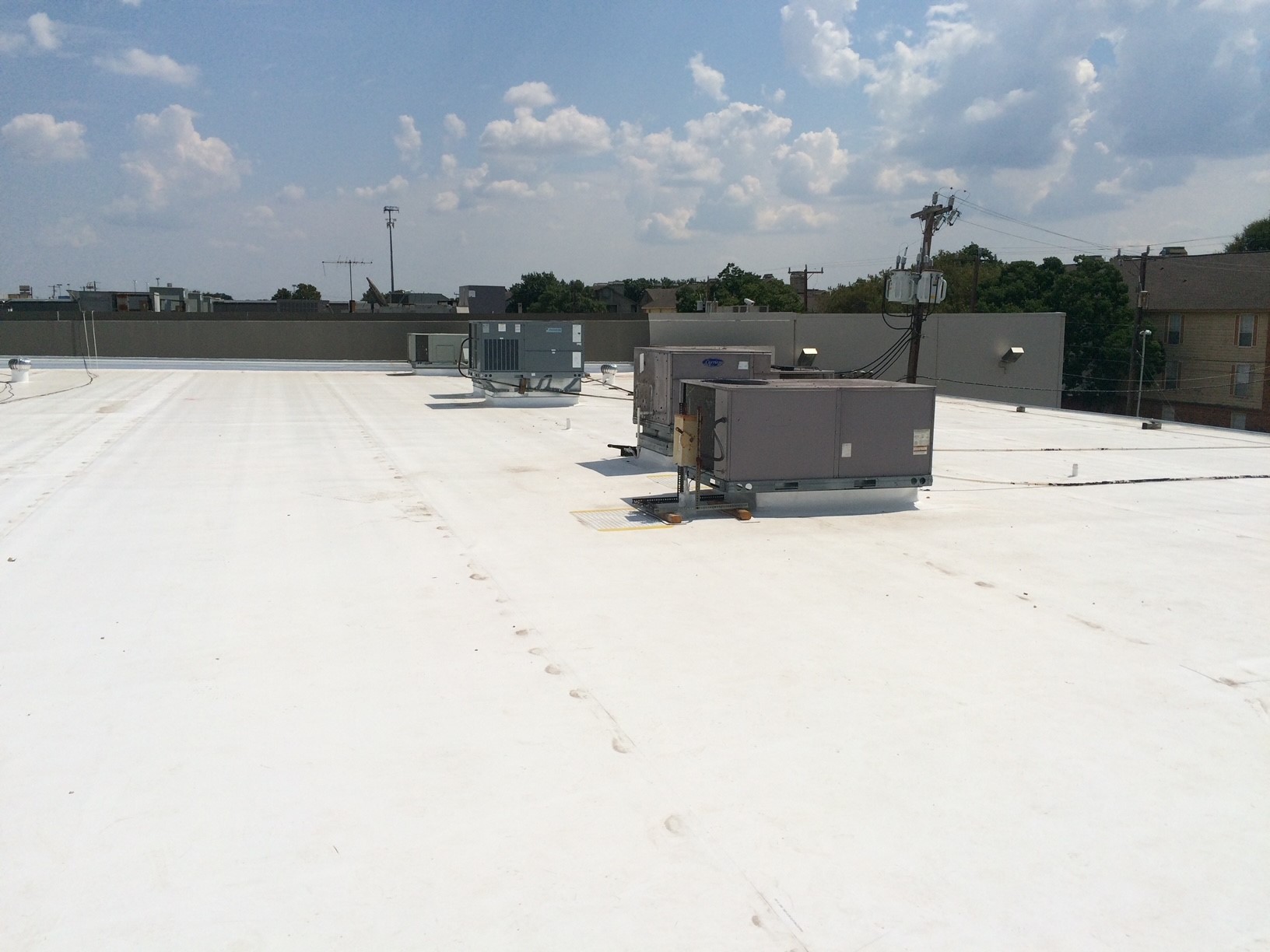
Westroads Mall, Oak View Mall, Village Pointe, and the strip center inventory along West Dodge and 72nd Street. After-hours production windows, anchor tenant coordination, and drain system management on large retail flat roofs.
Omaha retail roofing concentrates in three tiers. The first is the regional mall inventory — Westroads Mall at and Oak View Mall at 139th and West Center are both large-footprint enclosed malls with flat-roof sections, complex drain systems serving interior courts, and anchor tenant lease requirements that shape what we can do and when. The second is the open-air lifestyle center tier, led by Village Pointe at 175th and West Dodge — multi-building mixed-use retail where each building's roof is a separate scope but the project is managed as a campus. The third is the strip center and neighborhood retail inventory along West Dodge Road, 72nd Street, and the Southwest Omaha commercial corridors.
Retail roofing is a scheduling problem as much as a technical problem. Westroads Mall and Oak View Mall have operating hours that restrict overhead work during customer traffic — most production on enclosed malls runs before-hours or after-close. Strip centers along busy retail corridors have parking constraints that limit staging. Village Pointe's outdoor pedestrian experience means debris management and dust control during demo work are part of the scope, not afterthoughts. We build these constraints into the project schedule before mobilization, not into the first week of production.
Drain management on large retail decks is one of the most common sources of repeat leaks in the Omaha retail inventory. Westroads-era mall construction was built with interior drain systems that collect water from large flat-roof expanses and channel it to interior downspouts running through the building. Partial blockage of those drains — even a few inches of debris accumulation — creates ponding water that cycles through freeze-thaw and accelerates membrane failure at the drain sump. We inspect, flush, and document every drain on the buildings we scope, and we include drain replacement or lining in the reroof spec where the existing drain hardware has failed.
Large-Deck Retail — Mall and Anchor Tenant Coordination
Enclosed mall reroofs require coordinating with the mall's property management team and, depending on the section, with individual anchor tenants who have lease clauses governing roof access and construction disruption. At Westroads and Oak View, anchor tenants typically require advance notice before any overhead work begins in their section, written acknowledgment from the landlord, and sometimes their own construction manager review of the scope and schedule. We build anchor tenant notification into our pre-construction timeline — these are not conversations to have the week before production starts.
After-hours production on an enclosed mall means planning for lighting, security coordination, and dock access for material delivery. Most mall management companies require that our crews be off the roof and out of the building by the time the early-morning opening cleaning crews arrive. We plan production windows to
Village Pointe and Open-Air Retail Campus Work
Village Pointe and similar open-air lifestyle centers present a different set of constraints than enclosed malls. Customer traffic flows through pedestrian areas directly adjacent to the buildings under work, which means debris management, dust control, and perimeter safety become part of the daily scope. We use hoarding panels or debris nets on sections where tear-off is active above pedestrian pathways, and we schedule loud demo work in the early morning before the center's peak customer hours.
Strip centers along West Dodge Road and the 72nd Street commercial corridor have tighter staging constraints — parking lots are the staging area, and tenant lease agreements often prohibit blocking more than a defined number of spaces. We stage materials in the minimum required footprint and coordinate delivery windows with the property manager to avoid peak customer periods.
Membrane Selection and Drain Management for Retail Roofs
Most Omaha retail flat roofs are appropriate for mechanically attached 60-mil TPO — the standard volume-grade specification that handles Nebraska freeze-thaw cycling, carries a 20-year manufacturer warranty, and installs efficiently on large, relatively flat commercial decks. PVC membrane is preferred on retail buildings where rooftop grease exhaust from food court tenants or restaurant pads creates a chemical exposure that TPO cannot tolerate — PVC handles grease degradation better than TPO formulations.
Drain management is the non-negotiable item in every retail roof scope we deliver. We inspect, camera-document, and flush every drain and downspout before the replacement scope is finalized. Ponding water on a large retail deck from a partially blocked drain will fail the new membrane at the drain sump within two winters. If existing drain hardware has failed or is undersized for the roof's drainage area, we include drain replacement or supplemental drain addition in the scope.
Frequently asked questions
Can you work overnight to avoid disrupting Westroads or Oak View Mall shoppers?
Yes. We plan overnight production windows on enclosed mall sections that are directly above open retail floors. Lighting, security coordination, and dock access for material delivery are part of our pre-construction logistics plan for mall projects.
How do you manage debris and dust control at Village Pointe and outdoor retail?
We use hoarding panels or debris nets on sections active above pedestrian areas, and we schedule loud demo work in early morning before customer hours. Debris is removed daily — there is no end-of-week cleanup on retail center projects.
What causes most Omaha retail roof failures?
Drain blockage from debris accumulation is the leading cause of repeat failures on large retail decks. Interior drains on mall and big-box buildings partially block over time — even a few inches of debris creates ponding water that cracks membrane at the drain sump through freeze-thaw cycling. We inspect and document every drain before finalizing the replacement scope.
Get a retail roof scope for your Omaha shopping center or strip center.
We will walk the full deck, document drain condition and membrane status, and deliver a written scope with a production schedule geared to your retail operating hours.
Ready to talk through a roof?
Tell us about the building and the roof problem. We'll document it and put a plan in writing — with an honest repair-vs-replace recommendation and no upsell pressure.