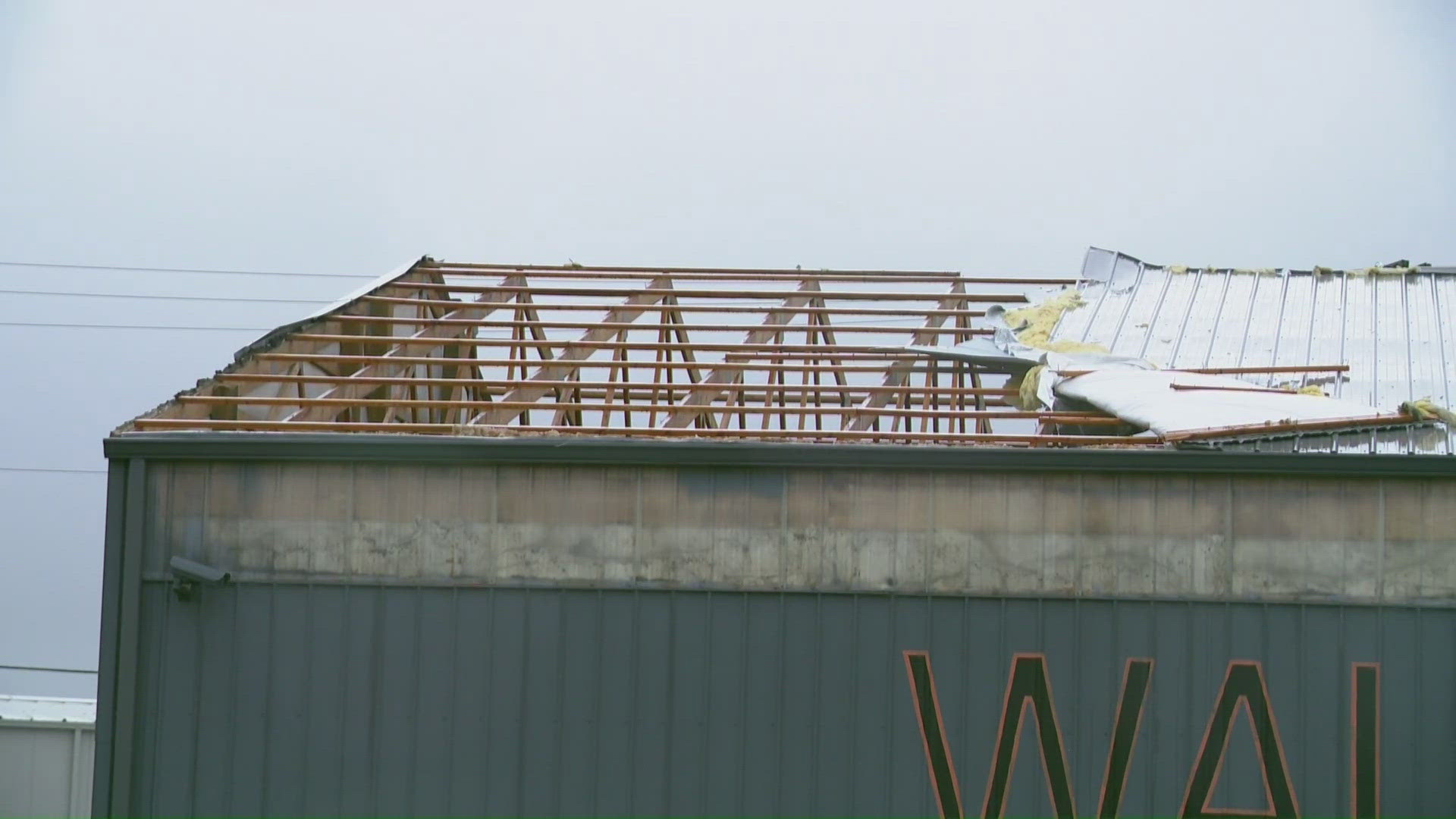
Eastern Nebraska averages more tornado activity than most of the country realizes. Douglas and Sarpy Counties see multiple tornado warnings per year, and the metro has taken direct hits from significant tornadoes in living memory. When the storm is over, the first question is whether the building is safe to re-enter. The second is how to document the damage so the insurance claim holds up.
Omaha sits in the central Great Plains tornado corridor. The metro has experienced significant tornado events including outbreaks that tracked through Douglas, Sarpy, and Washington Counties. The May 2004 tornado outbreak caused substantial damage along a path through the south Omaha industrial district and into the Bellevue commercial corridor near Offutt Air Force Base. Previous events have tracked through North Omaha and across the river into Council Bluffs.
Tornado damage to commercial roofs is categorically different from derecho or hail damage. Tornadoes produce extreme localized uplift — enough to lift entire roof deck sections, not just membrane. They also generate significant debris impact: gravel, tree limbs, and building materials from adjacent structures can perforate membrane, shatter skylights, and crack parapet masonry. The damage assessment has to separate what the tornado's wind uplift did from what the subsequent debris impact did, because the repair scopes and insurance documentation requirements are different.
We have assessed tornado-damaged commercial roofs in Douglas and Sarpy Counties. The consistent finding is that initial visual inspection understates the damage — interior ceiling damage and membrane delamination in zones adjacent to the visible impact area routinely exceed what the street-level view suggests.
Structural Assessment Before Roof Repair
A tornado-damaged commercial building requires structural verification before any crew goes on the roof. We do not put project managers or crews on a roof after a tornado event until a structural engineer has cleared the deck and parapet for access. This is non-negotiable. Tornado uplift can lift the membrane off the insulation, lift the insulation off the deck, and in some cases lift the deck panel off the structural framing below — a roof that looks solid from the access hatch can have panels that are not attached to the structure underneath.
Our standard protocol after a tornado event: we contact the building owner, request the original structural drawings if available, and coordinate a structural walk with a licensed Nebraska PE before our inspection begins. The structural engineer's clearance document becomes part of the final insurance claim package. In the absence of structural drawings, we probe deck attachment at a minimum of 20 points across the roof area before allowing full-crew access.
After the structure is cleared, our inspection follows the same sequence we use for derecho damage — membrane survey, fastener pull-test, parapet assessment, equipment anchorage — with the addition of a full debris-impact mapping exercise that documents every puncture, crack, and impact dent by location on a roof zone diagram.
Common Tornado Damage Patterns on Omaha Commercial Roofs
Membrane uplift at the leading corner: Tornado wind rotation creates the highest uplift pressure at the upwind building corners — the zones where IBC wind tables already require the heaviest fastener density. On buildings with correctly specified corner-zone fastener patterns, we typically find the membrane held in the corner zone and failed at the adjacent field zone where fastener density steps down. On buildings with undersized corner-zone fastening, the failure initiates at the corner and propagates rapidly across the perimeter.
Debris perforation in the field membrane: Even a small tornado produces airborne debris at velocities that punch through 60-mil TPO and 60-mil EPDM. We have found 2x4 lumber embedded in field membrane, gravel from adjacent roofs piled against equipment curbs, and HVAC duct sections from neighboring buildings draped across parapet caps after tornado events in the metro area. Each perforation is an active water entry point — the mapping and temporary sealing of these perforations is the emergency repair phase before permanent scope is developed.
Parapet cap displacement: The metal coping cap on a commercial parapet is attached with cleats or fasteners to the parapet cap stone or masonry. Tornado uplift — particularly on the leeward side of the building where negative pressure creates suction rather than positive pressure — can strip the coping cap entirely off the parapet. Without the coping cap, water enters the parapet cavity, saturates the masonry, and begins a freeze-thaw damage cycle that accelerates parapet deterioration through the following winter.
Tornado Damage Insurance Documentation
Tornado claims for commercial roofs require a date-of-loss roof report that documents the damage as it existed on the day of the event, not weeks later after temporary repairs have altered the visible evidence. We prioritize producing a written initial inspection report within 48-72 hours of any tornado event affecting a building we are called to inspect. This report captures the pre-repair condition with photographs, measurements, and written descriptions that the adjuster can anchor the claim to.
The final documentation package for a tornado claim includes the initial inspection report, the structural engineer clearance letter, the debris-impact map, the membrane uplift documentation with fastener pull-test results, the repair scope with material specifications, and the contractor cost estimate. We have assembled this package for multiple Omaha commercial tornado claims and know what documentation gaps create claim disputes.
One documentation issue specific to tornado events: tornadoes often damage multiple buildings simultaneously, and adjusters are inspecting dozens of damaged properties. We write our inspection reports to stand alone — a new adjuster who has never seen the building can read the report, understand what failed and why, and map the claimed damage to the repair scope without a follow-up site visit.
Frequently asked questions
Is the Omaha area at high risk for tornadoes?
Yes. Eastern Nebraska is within the central Great Plains tornado corridor. Douglas County averages multiple tornado warnings per year, and the metro area has received direct tornado strikes including the 2004 outbreak that tracked through South Omaha and Bellevue. Spring months — April through June — are the highest-risk period, but significant tornado events have occurred in the Omaha metro in March, October, and November.
Do we need a structural engineer before you repair our roof after a tornado?
Yes, for any tornado event with visible deck or parapet damage. We will not put crews on a tornado-damaged roof without structural clearance. We coordinate the structural engineer engagement through our project management team — we have relationships with licensed Nebraska PEs who understand the urgency of post-storm inspection timelines.
What is the typical repair timeline after a tornado event in Omaha?
Emergency dry-in within 24-48 hours of clearance. Structural engineer inspection typically 24-72 hours after the event. Full damage inspection and scope development 3-5 days. Permanent repair, depending on scope: 1-3 weeks for membrane-only work, 4-8 weeks if parapet reconstruction or deck repair is involved. We give a written production schedule before permanent repair begins.
Tornado-damaged commercial roof in Omaha?
Call 402-258-5343. We coordinate structural clearance, produce a date-of-loss inspection report within 72 hours, and develop a repair scope detailed enough to support your insurance claim.
Ready to talk through a roof?
Tell us about the building and the roof problem. We'll document it and put a plan in writing — with an honest repair-vs-replace recommendation and no upsell pressure.