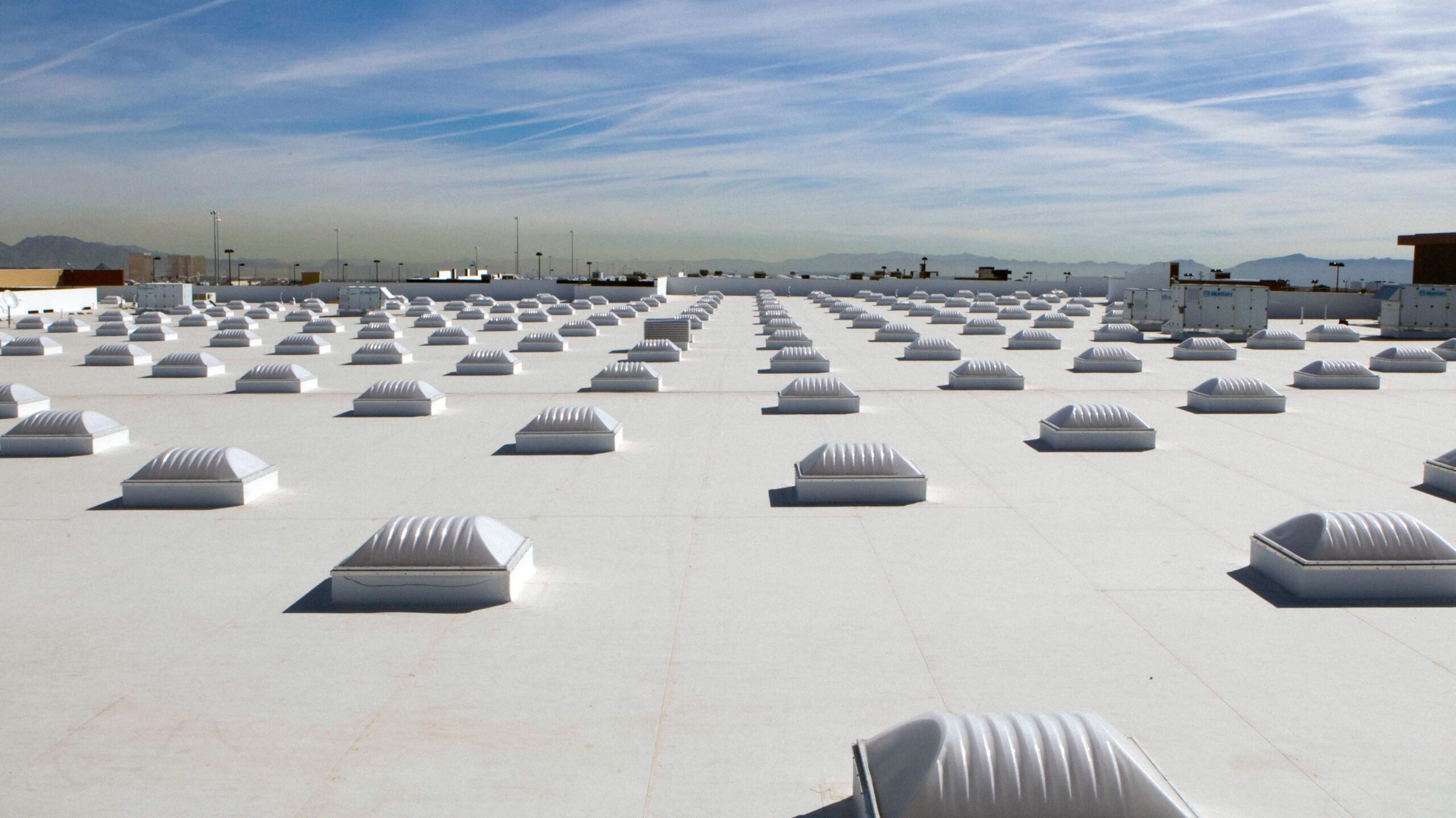
Roof Systems
Omaha's July surface temperatures on dark commercial roofs exceed 155°F — 55°F above ambient air temperature. A properly specified cool roof system reduces that surface temperature by 50-80°F, cutting cooling loads on rooftop HVAC equipment and reducing the urban heat contribution of the building's roof footprint.
Cool roofing in ASHRAE Zone 5A requires more nuance than in heating-dominated markets with mild winters. The cool roof energy penalty — reduced heat gain in winter from a reflective surface — is real in Omaha. Nebraska heating loads are significant: the city averages 6,000-6,500 heating degree days per year, compared to 2,000-3,000 in Zone 2 and Zone 3 markets where cool roofs are universally specified. The winter energy penalty from a cool roof in Omaha can offset a meaningful share of the summer cooling savings, particularly on buildings with low thermal mass and high ceiling-to-floor ratios.
That said, the analysis consistently favors cool roofing on most Omaha commercial buildings when the insulation stack is correct. IECC 2021 Zone 5A requires R-25 minimum for low-slope assemblies — a well-insulated roof limits winter heat loss through the assembly regardless of membrane color, so the cool roof's winter penalty is applied to a base that is already minimized by insulation. The summer savings on a large-footprint Omaha warehouse or distribution center with significant rooftop HVAC load are substantial. We run the energy model for each building we scope when the cool-roof decision is not obvious.
We are at — phone 402-258-5343. Every cool roof scope we deliver includes the reflectance and emittance ratings for the specified membrane or coating, the Energy Star or CRRC certification, and the insulation spec that makes the winter-penalty analysis favorable for the building's use and HVAC configuration.
Cool Roof Performance in the ASHRAE Zone 5A Climate
ASHRAE Zone 5A's humidity and heating dominance creates a specific cool roof performance profile. In summer, Omaha's high humidity reduces the radiative cooling advantage of a white roof compared to a dry desert climate — the sky is warmer and emits more radiation back to the roof surface. But Omaha's July ambient temperatures — averaging 89°F highs — still produce significant roof surface temperature differentials: a 155°F dark roof surface vs. a 85-95°F white or reflective surface under the same conditions. That 60-70°F surface temperature reduction translates directly to reduced heat flux through the roof assembly and lower cooling demand on rooftop HVAC equipment.
The freeze-thaw cycling that defines Zone 5A's winter envelope is also relevant for cool roof membrane selection. White TPO and white PVC are the most reflective membrane options — solar reflectance index (SRI) values of 104-108 for white single-ply vs. 0-10 for dark membranes. Both membranes handle freeze-thaw cycling well when properly installed. The critical detail for cool roofs in freeze-thaw climates is seam quality — white membrane seams are heat-welded the same way as standard color membranes, but the white surface makes it easier to visually identify areas of incomplete weld or seam lifting that need correction during installation.
Silicone-coated modified bitumen or BUR substrates are the cool-roof path for existing buildings that cannot justify full membrane replacement. A white silicone topcoat on a qualifying modified bitumen substrate achieves SRI values of 85-100 depending on coating thickness and formulation. The coating investment is 20-40% of replacement cost, and the cool-roof benefit begins from day one of installation. We assess coating candidacy with moisture cores before recommending this path — coating over wet insulation produces no net benefit.
Derecho and Storm Events — Cool Roof Implications
The August 2020 Midwest derecho and its aftermath raised a cool-roof specific question among several Omaha building owners: does the white membrane create an additional visual or thermal challenge for insurance adjusters assessing storm damage? The answer from our experience is no — white TPO and PVC membranes make post-storm assessment easier, not harder. Membrane tears, scrim exposure, seam separation, and fastener-plate pull-through are all more visible on a white surface than on gray or tan membrane. Adjuster photo documentation after the 2020 derecho was consistently clearer on white-membrane roofs.
Hail damage assessment on cool roofs is also more straightforward. The 1.5-2.5 inch hail events that move through Douglas County most springs create impact marks on white TPO and PVC that are visible on aerial inspection and easy to photo-document at the surface level. The same hail on a gray or tan membrane requires closer inspection to locate impact marks. We provide post-hail cool-roof assessment as a documentation service for buildings on our maintenance contracts — photos, zone diagram, and written scope of any repairs needed.
Snow accumulation on cool roofs deserves a note for Omaha building owners. A dark membrane's absorption of solar radiation contributes to snow melt on the roof surface after winter storms — reducing the live load the structure carries through the winter. A high-reflectance cool roof absorbs less solar radiation, which can result in snow remaining on the roof surface longer after a storm. Omaha's design roof snow load under ASCE 7-22 is 17-20 psf for most commercial buildings — structures designed to this load handle the accumulated snow without issue. But for older buildings with uncertain structural records, we note the snow-melt reduction as a factor in the cool-roof analysis.
Energy Code and Utility Rebate Context for Omaha
Nebraska adopted IECC 2021 with state amendments, effective for commercial construction permits issued after July 2023. The code mandates minimum insulation values — R-25 for Zone 5A low-slope roofs — but does not mandate cool roof membrane color or SRI values for commercial buildings. However, Energy Star's roofing program does provide a certification path that several Omaha building owners use for sustainability reporting, tenant attraction, and carbon accounting.
OPPD — Omaha Public Power District — does not currently offer commercial roofing rebates for cool roof installation as of our last inquiry. The energy savings from a cool roof on an Omaha commercial building are captured in reduced electricity demand charges and lower HVAC equipment runtime, not in utility rebate programs. We give building owners the pre-installation estimate of cooling load reduction based on the ASHRAE 90.1 energy model for their building type and occupancy.
LEED and other green building certification frameworks do give credit for cool roof systems that For Omaha commercial buildings pursuing LEED certification — particularly in the Aksarben Village development and the growing Class A office market in the Farnam corridor — cool roof membrane selection is a low-cost way to accumulate credits. We document the membrane's SRI value and Energy Star certification in the closeout package for LEED submittals.
Frequently asked questions
Does a cool roof save money on energy bills in Omaha?
For most commercial buildings in Omaha, yes — with the caveat that the insulation stack must be at or above IECC minimum. A well-insulated building with a cool roof membrane sees cooling electricity savings that typically exceed the winter heating penalty in Omaha's climate. For buildings with R-10 or lower existing insulation, fixing the insulation stack delivers more energy savings than membrane color. We run the building-specific energy analysis when the decision is not straightforward.
What is the best cool roof option for an Omaha commercial building?
For replacement projects, white 60-mil TPO is the highest-SRI, most cost-effective cool roof membrane for Omaha commercial buildings. For recover or restoration projects where replacement is not justified, white silicone coating over a qualifying modified bitumen or EPDM substrate achieves SRI values comparable to new TPO at 20-40% of replacement cost. For metal roofs, painted Galvalume with a high-reflectance paint system achieves SRI values of 65-80 — lower than TPO but significantly better than unpainted steel.
Will a cool roof affect my Nebraska Energy Code compliance?
Cool roof membrane color does not affect Zone 5A energy code compliance — the code specifies insulation R-value, not membrane reflectance, for commercial buildings. Your insulation stack must meet R-25 minimum regardless of whether you install a white or dark membrane. A cool roof combined with adequate insulation meets code and delivers the energy benefit. A cool roof on inadequate insulation meets code on the cool-roof dimension but not on the insulation dimension — and the insulation fix is the higher-value investment.
Evaluating a cool roof for an Omaha commercial building?
We will assess your existing insulation stack, run the energy model for your building type and HVAC configuration, and produce a written cool-roof scope with reflectance specs and lifecycle cost comparison.
Ready to talk through a roof?
Tell us about the building and the roof problem. We'll document it and put a plan in writing — with an honest repair-vs-replace recommendation and no upsell pressure.