Roof Systems
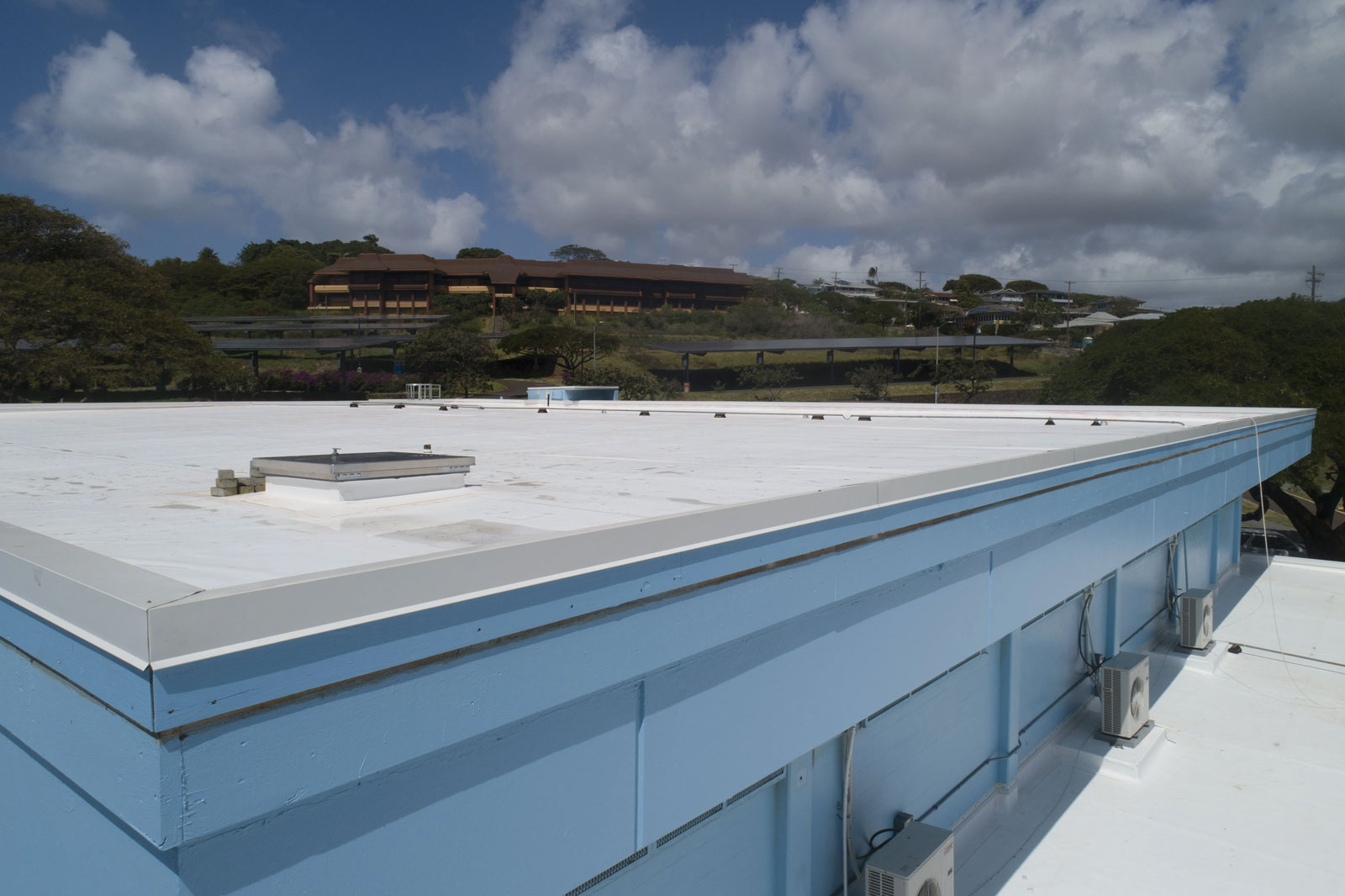
PVC polyvinyl chloride is the membrane of choice for Omaha commercial buildings with grease exhaust, chemical exposure, or food-service environments where EPDM and TPO would degrade at penetrations and exhaust fans. We install 50-mil and 60-mil PVC systems to manufacturer-spec details with 20-25 year warranty paths.
PVC's primary advantage in the Omaha commercial market is chemical resistance. Restaurant grease, kitchen exhaust condensate, and commercial cleaning chemicals that would degrade EPDM or attack TPO lap adhesive have no effect on a properly installed PVC membrane. That matters for the restaurant corridors along West Dodge Road, the food-service facilities in the north Omaha industrial zone, and the hospital kitchen and loading-dock roofs at the UNMC campus.
PVC is also the most weldable single-ply membrane. Hot-air welds on PVC are stronger than the base membrane — a properly welded PVC seam will not open at the weld before it tears somewhere else in the field. That seam integrity is relevant in Omaha's freeze-thaw climate: 50-70 thermal cycles per winter stress every seam in the roof assembly, and a material with superior weld performance holds better over time than systems where the weld is the weak point.
The trade-off is cost and temperature performance. PVC is more expensive per square than TPO or EPDM. And while PVC performs adequately in Omaha's temperature range, the membrane's plasticizers can migrate out over 20-25 years, making older PVC brittle — particularly relevant for legacy 45-mil PVC systems installed in the 1990s that are now reaching end of life. We assess plasticizer condition during inspection by checking membrane flexibility at corners and flashings. If the membrane cracks when folded back at 40°F, it has lost enough plasticizer that replacement is the right scope. Contact us at 555-555-.
When PVC Is the Right System for an Omaha Building
Food-service and restaurant buildings are the clearest case. A restaurant roof on West Dodge Road has grease exhaust fans, kitchen ventilation, and condensate drains that concentrate chemical attack at every penetration. EPDM degrades on contact with petroleum-based grease. TPO's lap adhesive can soften with sustained chemical contact at drain flanges and exhaust-fan curbs. PVC is inert to those materials and is the manufacturer-recommended membrane for food-service roofs across all major warranty programs.
Chemical manufacturing and processing facilities in the north Omaha industrial corridor and the I-80 industrial parks are the second category. Solvent vapors, acid fumes, and industrial cleaning chemicals exit through roof penetrations and accumulate around drains and HVAC curbs. PVC handles those exposures better than either EPDM or TPO over a 20-year service life.
The UNMC and Nebraska Medicine campus is the third category in Omaha. Medical facility roofs carry pharmaceutical exhaust, sterilization chemical vents, and laboratory exhaust that require chemical-resistant membrane at every penetration. We have completed PVC projects on UNMC-adjacent buildings where the chemical exhaust profile made PVC the only manufacturer-warranted option.
PVC in ASHRAE Zone 5A — Plasticizer Migration and Cold-Weather Installation
ASHRAE Zone 5A's heating-dominated climate creates two specific PVC challenges. The first is plasticizer migration — the process by which the plasticizers that keep PVC flexible slowly migrate out of the membrane over decades of thermal cycling. Omaha's 125°F annual temperature swing (-25°F to 100°F) accelerates plasticizer migration compared to milder climates. Modern 50-mil and 60-mil PVC formulations include plasticizer packages designed for Zone 5A longevity, but older 45-mil systems from the 1990s are now failing in this mode. We document plasticizer condition by bending membrane samples at 40°F during inspection — a membrane that cracks under gentle bending is past its service window regardless of how the field surface looks.
The second challenge is cold-weather installation. PVC becomes increasingly stiff below 40°F and difficult to work with below 20°F. Hot-air welding is still possible at cold temperatures — the welder heats the membrane locally regardless of ambient temperature — but membrane handling and detail work require experienced crews who know how to pre-warm membrane sections before forming corners and flashings. We do not install fully adhered PVC membrane when substrate temperatures are below 40°F. Mechanically attached PVC can be installed at lower temperatures with appropriate membrane pre-warming.
The insulation spec under a Zone 5A PVC system is the same as for TPO and EPDM: minimum R-25 under IECC 2021, tapered to drain layout, with a cover board rated for the membrane's adhesive or mechanical-attachment system. PVC-compatible cover boards are specified — not all gypsum cover boards are rated for PVC membrane adhesive, and an incompatible cover board voids the manufacturer warranty.
PVC and Derecho Wind Events
PVC mechanically attached systems held well in the August 2020 derecho across the Omaha metro. The membrane's weld-strength-exceeding-membrane characteristic means the seams are not the failure point under extreme wind uplift — if the system fails, it fails at the fastener plate or by tearing the membrane in the field, not by opening at the weld. This is a design advantage in derecho conditions where straight-line wind uplift hits the seam zone on mechanically attached systems.
The fastener pattern calculation for PVC systems in Omaha is identical to TPO — we run ASCE 7-22 from actual exposure category, specifying field zone, perimeter zone, and corner zone fastener densities separately. Buildings near Eppley Airfield in the open Missouri River plain are Exposure C and require the most conservative pattern. We document the exposure determination in writing and include it in the closeout package.
For buildings that experienced PVC membrane damage in the 2020 derecho, field-welded PVC patches are a reliable repair method. PVC weld-on-weld adhesion is strong, and a properly installed PVC patch over a tear or fastener pull-through holds well through subsequent thermal cycling. We document derecho repairs with photo logs and a zone diagram sufficient for insurance documentation.
Frequently asked questions
What thickness of PVC do you install?
50-mil PVC for standard commercial applications — restaurant roofs, light industrial, office buildings without heavy mechanical traffic. 60-mil PVC for heavy-traffic environments, buildings with frequent rooftop HVAC maintenance, or owners who want the 25-year warranty path. We do not install 45-mil PVC on new or recover projects in Omaha — the plasticizer migration risk at this thickness is too high for the Zone 5A thermal range.
Is PVC more expensive than TPO?
Yes, typically 15-25% more per square installed for equivalent thickness. The additional cost is justified for food-service roofs and chemical-exposure environments where TPO's warranty would be voided by chemical contact. For a standard office or warehouse building without chemical exhaust, TPO is the better cost-per-year choice. We give you the comparison in writing when we scope the project.
How do you handle PVC installation on an occupied restaurant during business hours?
We sequence the work to avoid covering or blocking kitchen exhaust fans during service hours. Pre-construction meeting with the restaurant's facilities contact determines exhaust fan shutdown windows — most restaurant kitchens can tolerate a two-to-four hour exhaust fan shutdown during non-service hours for curb replacement work. Membrane work in the field runs during full-day windows that do not require exhaust fan shutdown. The production schedule is set in writing before contract signing.
Chemical-exposure or food-service roof on an Omaha building?
We will walk the roof, assess the chemical exposure profile at each penetration and exhaust fan, and produce a PVC scope with manufacturer warranty path and installed-cost detail.
Ready to talk through a roof?
Tell us about the building and the roof problem. We'll document it and put a plan in writing — with an honest repair-vs-replace recommendation and no upsell pressure.