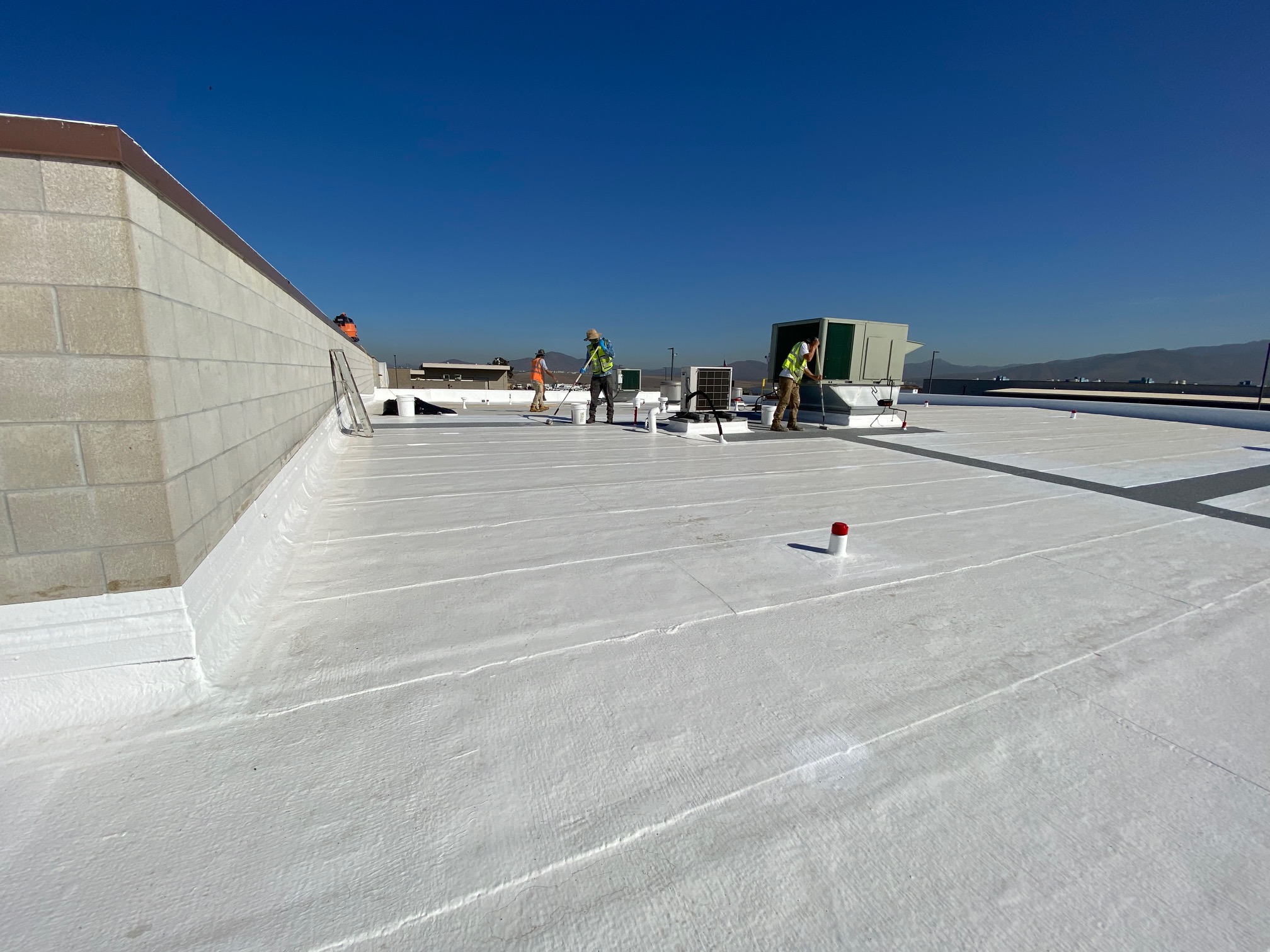
Silicone and Ponding Water in the Omaha Climate
Ponding water — water that remains on a flat roof for more than 48 hours after a rain event — is the single most common roof condition we document on Omaha commercial buildings. The culprit is almost always inadequate slope-to-drain design: the original building was designed with minimum slope (1/4 inch per foot) that has settled or deflected over decades. The drain layout that looked adequate on the as-built drawings produces standing water in low areas between drains when the building deflects.
Acrylic coatings lose adhesion when submerged — the water softens the acrylic film and breaks the bond to the substrate over time. Silicone maintains full adhesion and flexibility through extended ponding. It is the only coating system we install on Omaha flat roofs precisely because Omaha flat roofs pond water. Manufacturer warranties for silicone on ponded-water substrates are available from every major silicone coating manufacturer — they are not available for acrylic on the same substrates.
Freeze-thaw cycling interacts with ponding water to create a second failure mode for coatings: ice adhesion. When ponded water freezes overnight and then thaws in the afternoon, the ice sheet moves slightly as it expands and contracts. This movement can shear a coating film from its substrate if the coating lacks adequate elongation and adhesion at low temperature. Silicone elastomeric coatings maintain elongation values well above 100% at -25°F — the temperature at which this failure mode occurs on Omaha roofs in January and February.
Substrate Requirements for Silicone Coating in Omaha
The silicone coating assessment starts with moisture cores and a seam-by-seam condition walk. Modified bitumen substrates must have less than 25% wet-core area and must have open laps and seams repaired before coating. A single open lap seam under a silicone coating allows water to infiltrate the insulation below and the coating will fail from below before it fails from the surface.
TPO substrates require surface prep — TPO's low surface energy must be addressed with an adhesion primer before silicone application. Without primer, the silicone does not bond adequately to TPO and delaminates within one to two winters of freeze-thaw cycling. We apply manufacturer-specified primer on every TPO coating project and document the primer application in the closeout package.
BUR and modified bitumen substrates must be clean, dry, and free of alligatored asphalt before coating. Alligatored asphalt presents too rough a surface for uniform mil thickness application, and the cracks in the asphalt are entry points for coating failure — the coating bridges cracks at installation but cannot bridge them through repeated freeze-thaw cycling. We apply a base coat and reinforcing fleece fabric over crack networks in BUR substrates before the finish coat, giving the coating system a bridge layer that handles substrate movement.
Silicone Coating Warranty Options
Silicone manufacturer warranties are available at 10, 15, and 20-year terms depending on applied mil thickness and substrate condition. A 20-year warranty typically requires 30+ wet mils of silicone applied in two coats, a qualifying substrate condition inspection by the manufacturer's field rep, and a maintenance agreement that includes annual inspection and minor touch-up. We coordinate the manufacturer inspection and the warranty closeout on every project that is warranted.
The warranty restores the insurance conversation on aging Omaha commercial roofs. A building owner with a 15-year-old TPO roof approaching the end of its 20-year warranty has a roof that is harder to insure and harder to refinance. A silicone coating with a new 15-year manufacturer warranty changes that conversation — the roof is now a warranted asset again. We see this used regularly on the West Omaha corporate campus buildings that are approaching their first major warranty milestone.
Warranty re-application is also an option after the initial coating warranty expires. If the coating is still in good condition at year 10 or 15, a wash-and-recoat with a new coat of silicone re-sets the warranty clock again — potentially extending the useful life of the original membrane to 30-35 years from initial installation. This is the lifecycle strategy that produces the lowest long-term cost per square on qualifying Omaha commercial roofs.
Frequently asked questions
Is my Omaha roof a good candidate for silicone coating?
The answer depends on two things: insulation moisture content and seam/lap condition. We pull moisture cores to determine if the insulation is dry — over 25% wet cores disqualifies the roof for coating regardless of surface condition. We walk every seam and lap to document bond condition — open laps must be repaired before coating. If the insulation is dry and the seams are bondable, silicone coating is almost always a better capital decision than replacement at that point in the roof's life.
How long does a silicone coating take to install on a typical Omaha commercial building?
A 20,000 square foot commercial building with a qualifying substrate takes three to five days for a two-coat silicone application, including surface prep, primer, base coat, and finish coat. Dry time between coats is weather-dependent — silicone coatings cure by atmospheric moisture, so higher humidity (common in Omaha's summer) accelerates cure. We schedule coating work for April through October to avoid freeze-affected cure and cold-weather adhesion issues.
What happens if it rains during silicone application?
Uncured silicone in contact with rain before the surface skin forms can be damaged or washed off. We monitor hourly forecast data during application and stop work if rain is forecast within four hours of the planned coat completion. Omaha's summer convective storms can develop in under an hour in June through August — we plan coating production with buffer time and do not apply the finish coat with an active storm cell within the metro area.
Aging Omaha commercial roof that might be a coating candidate?
We will pull moisture cores, walk the seams, and produce a written coating candidacy assessment — with a cost comparison between coating and replacement and the manufacturer warranty path for a qualifying substrate.
Ready to talk through a roof?
Tell us about the building and the roof problem. We'll document it and put a plan in writing — with an honest repair-vs-replace recommendation and no upsell pressure.