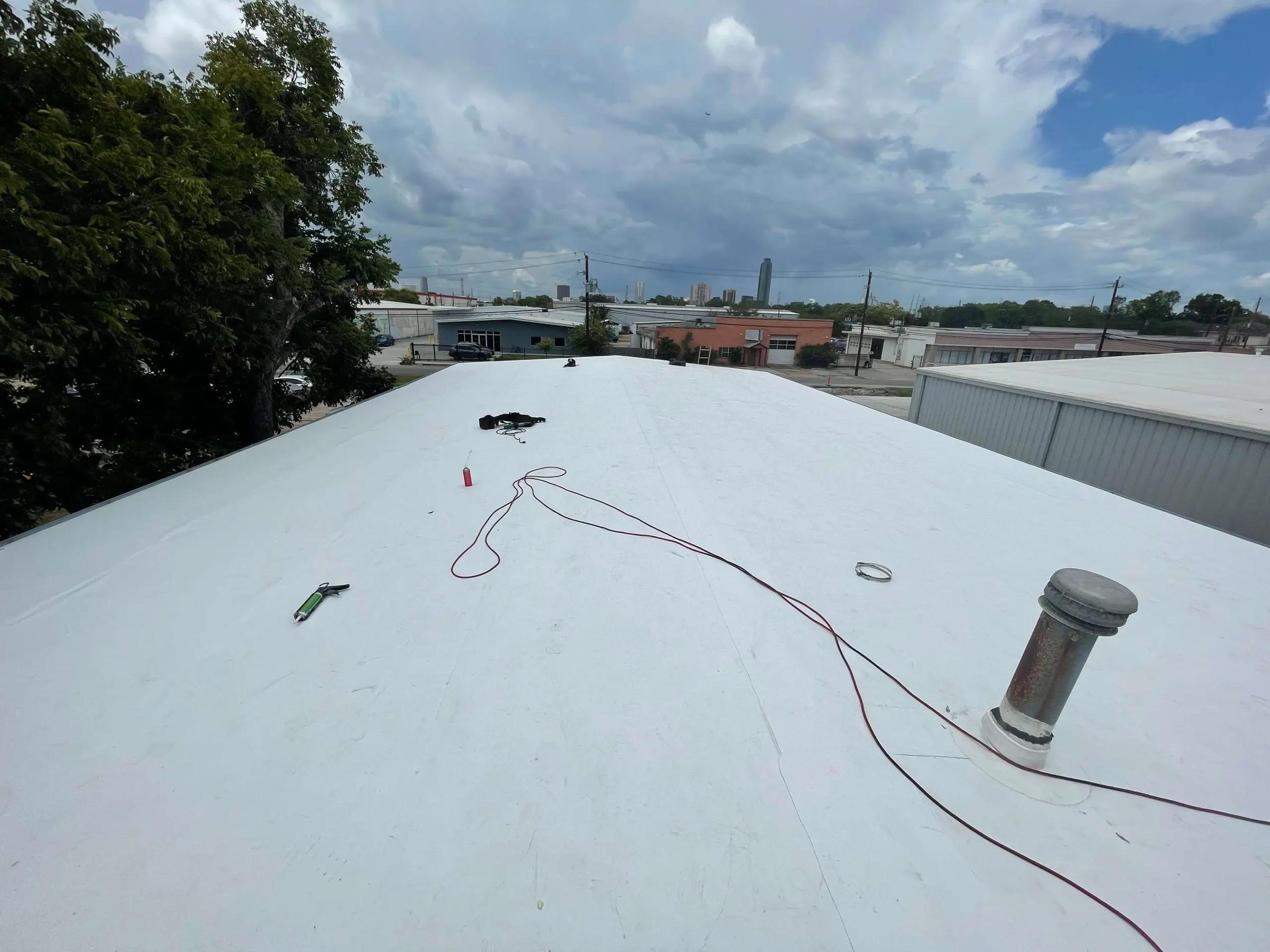
A roof walk without a written deliverable is not an inspection — it is an opinion. Our inspections produce documented condition reports, zone-keyed photos, and moisture-core results that building owners, facility managers, and capital planners can actually use.
Most commercial roof inspections in Omaha end with a verbal summary and maybe a follow-up email with a photo or two attached. That is not a deliverable — it is a starting point that evaporates the moment the inspector leaves the parking lot. When a leak develops six months later, the 'inspection' provides no documentation of pre-existing conditions, no recorded drain status, no flashing measurements, and nothing the building owner can take to an insurance adjuster or a capital committee.
We inspect commercial roofs on a written protocol. Every access hatch, every drain, every penetration, every parapet cap, every flashingrun, and every area of observed ponding gets documented — condition noted, photos taken, keyed to a zone diagram of the roof. On roofs with suspected moisture intrusion, we pull moisture cores in representative locations and record the results in the report. The written report goes to the building owner within five business days of the walk.
The inspection report has three uses we write toward every time: capital planning (what needs to happen, when, and at roughly what cost band), warranty support (documented condition that satisfies annual inspection requirements on manufacturer-warranted systems), and insurance documentation (pre-storm condition record that makes post-storm insurance claims easier to substantiate). Most Omaha building owners who use us for inspections started because they needed one of those three — they keep using us because the report satisfies all three at once.
What the Omaha Inspection Protocol Covers
Drain condition is the first item on every Omaha inspection protocol. Nebraska's spring storm season deposits debris fast — cottonwood seed in May, hail-stripped tree matter in June and July, and whatever a derecho throws at the roof in any given August. Drain strainers clogged with debris create ponding that works under perimeter flashings and around penetrations. We measure drain height relative to the surrounding membrane, note strainer condition, and flag any drain showing ponding staining or debris accumulation above the strainer.
Parapet flashing condition is the second item. Omaha's freeze-thaw cycling — 50-70 events in a normal winter — moves parapets. Brick parapets cycling between -25°F and 100°F develop cap flashing gaps, reglet separations, and through-wall tie cracks that allow water entry at the parapet-to-roof transition. We measure and photograph every parapet run. Flashings showing open laps, separations from the substrate, or cap flashing gaps get flagged with a priority rating in the report.
Field membrane condition: seam probe test on accessible areas of heat-welded single-ply systems, EPDM seam peel test on vulnerable tape-seamed areas, BUR surface condition including alligatoring, ridging, exposed aggregate loss, and blister mapping. Penetrations — every HVAC curb, pipe boot, vent, conduit, and skylight — get individual condition notes. Caulk condition around pitch pockets and penetration flanges is recorded. Any area of repair history gets noted with approximate repair date if identifiable.
Moisture-core protocol: on roofs showing ponding staining, soft-feel underfoot, or any evidence of past intrusion, we pull and record cores in five to ten representative locations. A moisture core kit (coring saw, moisture meter) goes on every inspection vehicle. The core results — wet, damp, or dry by zone — map directly onto the zone diagram in the report and drive the recover-versus-replace recommendation.
Who We Inspect For
Property management companies handling Omaha commercial portfolios need inspection reports that cover the portfolio on a recurring schedule — same format, same zone-keyed photo protocol, same deliverable every year — so they can compare year-over-year condition and present clean capital planning data to property owners.
Building owners preparing for acquisition, disposition, or refinancing need a credible third-party inspection report that documents current roof condition, remaining useful life estimate, and any deferred maintenance. Our inspection reports are written for that use — we state condition, estimated remaining life, and the capital spend we expect to recommend and when.
Insurance adjusters and risk managers need pre-storm documentation to establish what was existing condition versus storm damage. Our inspection reports, with date-stamped zone-keyed photos and core results, satisfy that requirement. Several Omaha buildings benefited from having our inspection reports on file after the August 2020 derecho — the pre-storm condition record made the storm-damage insurance claim faster and less contested.
Inspection Timing and Nebraska's Climate Calendar
The best inspection windows in the Omaha metro are May (before the June-July storm season, after the last freeze-thaw event) and September (after the convective season closes, before the November freeze cycle opens). May inspections give facility managers the condition picture before summer storms arrive and the emergency-call period starts. September inspections close out the storm season and set the capital planning baseline for the following year's budget cycle.
We also do inspections immediately after significant weather events — after derecho or severe-storm events that cross Douglas County, after hail events above one inch (confirmed by NOAA storm reports), and after Missouri River flooding events that may have affected drainage infrastructure on buildings in the floodplain north and east of Downtown.
For buildings on our annual maintenance contracts, the inspection is built into the contract cadence — two inspection walks per year, spring and fall, with written reports included. The inspection triggers any maintenance work the report identifies, and the maintenance record becomes part of the manufacturer warranty file.
Frequently asked questions
What do I receive after the inspection?
A written condition report: a zone diagram of the roof with each area labeled and photographed, a drain-by-drain condition table, a parapet and flashing condition summary, field membrane condition notes, penetration condition notes, moisture-core results (if cores were pulled), a priority matrix ranking identified issues from immediate to deferred, and an estimated capital timeline. Delivered within five business days of the walk.
Does the inspection satisfy manufacturer warranty annual inspection requirements?
For most manufacturer warranty programs — GAF, Carlisle, Johns Manville, Sika, Versico, Firestone — an annual inspection by a certified contractor and a written report is the annual maintenance requirement. We are certified installers for those manufacturers. The inspection report we produce satisfies the warranty maintenance documentation requirement. We file a copy in the building's warranty record.
How long does a commercial roof inspection take?
For a typical 30,000-50,000 sq ft single-story commercial building: two to three hours on the roof, five business days to the written report. Larger campuses with multiple buildings, or buildings requiring extensive moisture coring, run longer on the roof. We schedule the site visit, confirm access with your facility manager, and deliver the written report on the agreed timeline.
Do you inspect roofs that another contractor installed?
Yes. We inspect commercial roofs regardless of who installed them. Third-party inspections are common for acquisitions, insurance renewals, and situations where the building owner wants an independent condition assessment before acting on a recommendation from the original contractor. Our report reflects what we observe, not what the prior installer documented.
Need a documented roof inspection for your Omaha building?
We will walk the roof, pull cores where the condition warrants it, and produce a written report within five business days — for capital planning, warranty documentation, or insurance purposes.
Ready to talk through a roof?
Tell us about the building and the roof problem. We'll document it and put a plan in writing — with an honest repair-vs-replace recommendation and no upsell pressure.