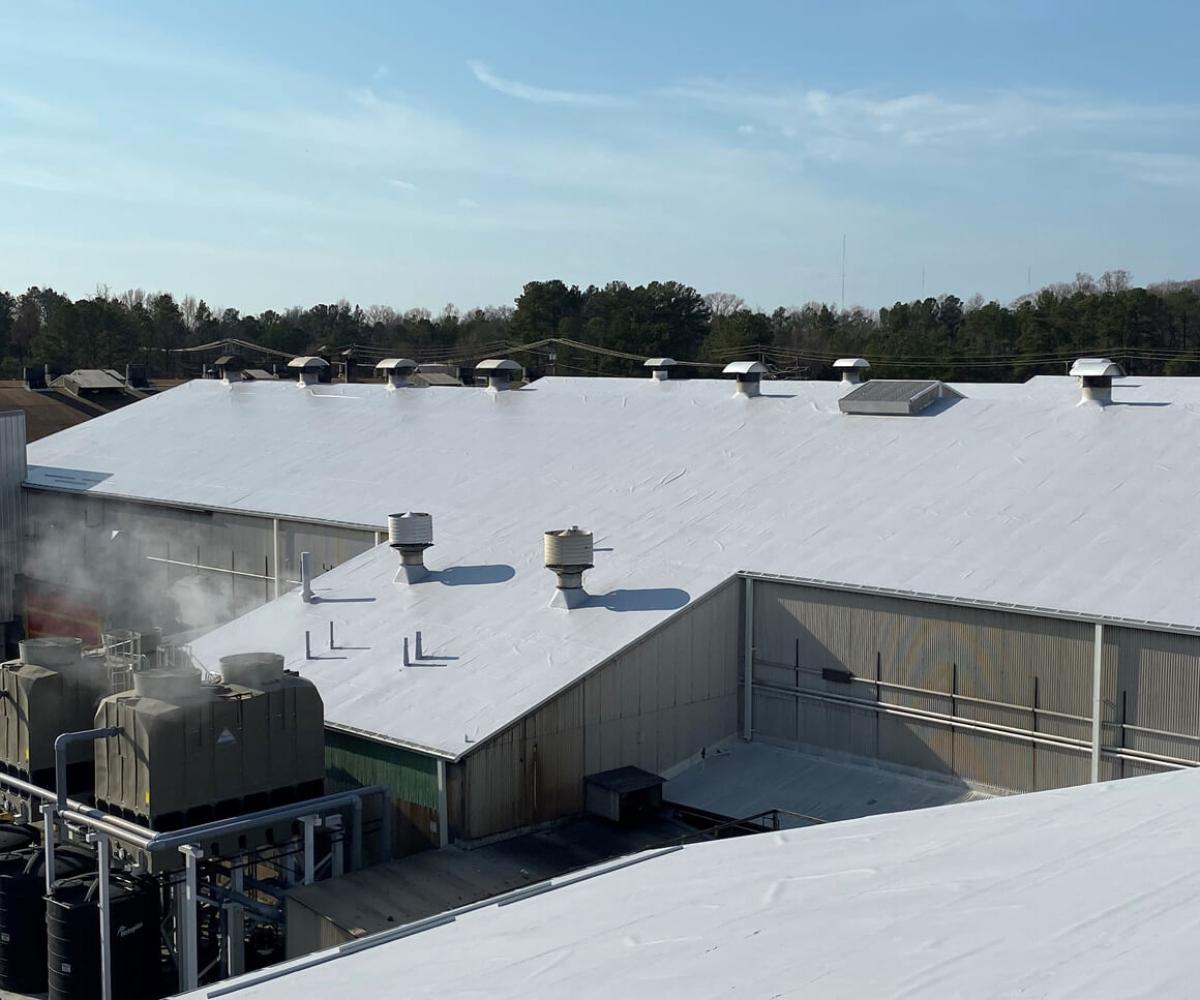
Valmont Industries operates its manufacturing facilities in Valley, Nebraska — just west of the Omaha metro. The broader manufacturing sector stretches across industrial parks in North Omaha, along the Missouri River bottom, and into the Sarpy County industrial fringe. These are not light commercial accounts. Manufacturing facilities present structural loading constraints, chemical exposure, industrial rooftop equipment, and operational schedules that make them a different discipline.
Manufacturing facilities are the most physically demanding commercial roofing environments in the Omaha metro. Valmont Industries, one of the world's largest manufacturers of infrastructure products — poles, towers, irrigation systems — runs its Nebraska manufacturing operations in Valley, roughly 20 minutes west of downtown Omaha. The Valley operations include massive steel fabrication and galvanizing buildings with structural steel roof frames, skylights, and the chemical environment generated by zinc galvanizing operations.
Industrial roofing requires a contractor who understands structural loading, not just membrane installation. A 60-mil TPO membrane on a steel manufacturing building carries a different set of design constraints than the same membrane on a suburban office park. The structural steel frame responds differently to snow and live load. The thermal movement of a large-span steel building — 300 to 500 feet of uninterrupted structural steel frame — creates expansion and contraction at parapet and penetration flashings that is an order of magnitude greater than a standard commercial building. The chemical environment from galvanizing operations, welding fume exhaust, and metal processing is hostile to standard membrane adhesives and flashing sealants.
My project managers scope manufacturing facilities with a structural and chemical review as part of the pre-construction process — not a field walk that ignores what is happening inside the building. If the galvanizing exhaust is off-gassing through a penetration into the roof assembly, we address that in the scope. If the structural steel frame has expansion joints that the original roof installation did not detail correctly, we correct it. The membrane is not the problem on most industrial roofing failures — the details are.
Valmont Industries — Valley, Nebraska
Valmont's Valley operations represent a large industrial roof footprint — multiple manufacturing buildings covering hundreds of thousands of square feet of low-slope and monitor-style roofing. The galvanizing operations create a zinc-fume environment that is incompatible with standard roofing adhesives and accelerates corrosion on uncoated metal flashing components. The large-span steel structures create significant thermal movement that must be accommodated at expansion joints and parapet flashings.
Our specification for galvanizing facilities uses: chemical-resistant flashing sealants rated for zinc and acid environments; stainless or hot-dip galvanized metal components for all flashing that will be in contact with the galvanizing exhaust zone; expansion joint covers designed for the full expected thermal movement range of the building's structural frame; and penetration flashings at exhaust stacks and roof fans with chemical-resistant pitch pockets where required.
North Omaha Industrial Zone
North Omaha's industrial corridor along the Missouri River bottom houses a range of manufacturing, processing, and distribution facilities that represent some of the oldest commercial roof stock in the metro. Many buildings in this zone were constructed between 1950 and 1980 — built-up roofing systems on original metal deck, some of which has never been assessed for corrosion since the original installation. The Missouri River humidity accelerates deck corrosion in ways that interior Nebraska industrial buildings do not see.
Before replacing a roof on a North Omaha industrial building of this vintage, we pull deck inspection ports at multiple locations and document deck condition. Corroded metal deck requires remediation or replacement before new membrane installation — covering corroded deck with new insulation and membrane traps moisture, accelerates deck failure, and voids the manufacturer warranty. We find and document this before the project starts, not mid-production.
Industrial Rooftop Equipment and Crane Access
Manufacturing facilities have rooftop equipment profiles that are categorically different from office or retail commercial buildings. Industrial exhaust fans, process ventilation stacks, crane rail penetrations (on buildings with interior overhead cranes), and cooling towers create a penetration density that makes standard membrane installation more complex and increases the probability of long-term flashing failure.
We photograph and document every rooftop penetration during inspection, specify the correct flashing detail for each type of penetration, and require closeout inspection of every flashing before warranty submission. On buildings with interior overhead cranes, we confirm with the facility's structural engineer whether the crane rail attachment points create roof penetrations that must be addressed in the scope.
Crane access for material delivery on manufacturing facilities often conflicts with interior production operations — overhead cranes inside the building, active production equipment on the floor, or security-controlled access points that restrict crane positioning. We coordinate crane access with facility management before mobilization and produce a crane staging plan that addresses the facility's operational constraints.
Frequently asked questions
How do you handle deck corrosion on older North Omaha industrial buildings?
We pull inspection ports in areas of suspected corrosion and at representative locations across the building. If deck corrosion is found, we document the extent and provide three options: full deck replacement (most expensive, highest-quality result), partial deck replacement in the corroded areas with new membrane over sound deck, or a structural engineer review to confirm whether the corroded deck can be remediated and recovered. We do not replace a roof over corroded deck without disclosing the condition and getting the owner's direction in writing.
What membrane do you recommend for a galvanizing facility?
PVC is the most chemically resistant option and our first recommendation for buildings where galvanizing exhaust contacts the roof membrane or flashing components. If PVC is cost-prohibitive over the full field, we use TPO in the field membrane with PVC used specifically at penetrations and flashings in the exhaust zone. Stainless steel or hot-dip galvanized metal components at all flashings — no copper, no standard mill-finish aluminum where zinc acid contact is possible.
Can you work around production shutdowns or plant maintenance windows?
Yes. Many manufacturing facilities have planned annual maintenance shutdowns — typically one to two weeks — that are the optimal roofing windows because interior production is stopped, crane access is available, and the noise and vibration of mechanical attachment does not affect production equipment. We schedule large industrial projects to align with planned shutdown windows wherever possible, and we scope the production sequence to maximize what we can complete in that window.
Scope an industrial roofing project in the Omaha metro.
We will walk the facility, assess deck condition and chemical environment, and produce a written scope with the right membrane specification for your industrial environment.
Ready to talk through a roof?
Tell us about the building and the roof problem. We'll document it and put a plan in writing — with an honest repair-vs-replace recommendation and no upsell pressure.