Most Omaha commercial roof leaks trace to one of four failure modes: a flashing detail that has opened under freeze-thaw cycling, a seam that was marginally welded at installation, a drain that has backed up under debris and is holding water, or a penetration that was never properly terminated. We identify which one before we put a crew on the roof.
Commercial roof repair in Omaha gets mishandled two ways. The first is the patch crew that shows up, slaps a piece of membrane over the wet spot on the ceiling, and leaves without finding the actual leak source — which can be fifteen feet upslope of where the water is entering the building. The second is the contractor who marks every soft spot on a 30,000 sq ft roof as 'repair needed' without distinguishing between minor flashing work and sections where the insulation is saturated and repair is just postponing replacement.
Our repair process starts with a roof walk and a written leak assessment that identifies the failure mechanism, the failure location, and the correct repair scope. For buildings where the leak source is ambiguous, we use infrared thermography after dusk or after a rain event — wet insulation retains heat differently than dry insulation, and it shows up clearly on an IR scan. The repair scope is written before any work order is issued. Crew mobilizes with the right materials for the identified repair, not with a generic patch kit.
We document every repair with before-and-after photos, GPS-tagged to the zone diagram we maintain for every building we access. When the next inspection happens — whether in six months or three years — the repair history is on file and the next project manager can see exactly what was done and whether the repair has held.
Common Repair Scenarios Across the Omaha Metro
Drain backing and ponding: Omaha's summer convective storms — the same storm pattern that brought the August 2020 Midwest derecho — can deliver two to three inches of rain in an hour. Any drain that is even partially blocked will back water across the roof field. We snake and jet drains, rebuild drain bowls where the flashing collar has separated, and install overflow drain upgrades where the primary drain system is undersized for the building's roof slope and tributary area.
Seam failure on TPO and EPDM systems: The corporate campuses along the Dodge Street corridor — Mutual of Omaha's campus, the CHI Health administrative buildings, the office inventory around Kiewit Plaza — run large-format single-ply systems installed in the 2000s and early 2010s. Those seams are now hitting the age range where marginal welds from installation are beginning to separate. We probe-test, cut out failed seam sections, re-weld with a hot-air welder, and re-test before leaving the roof.
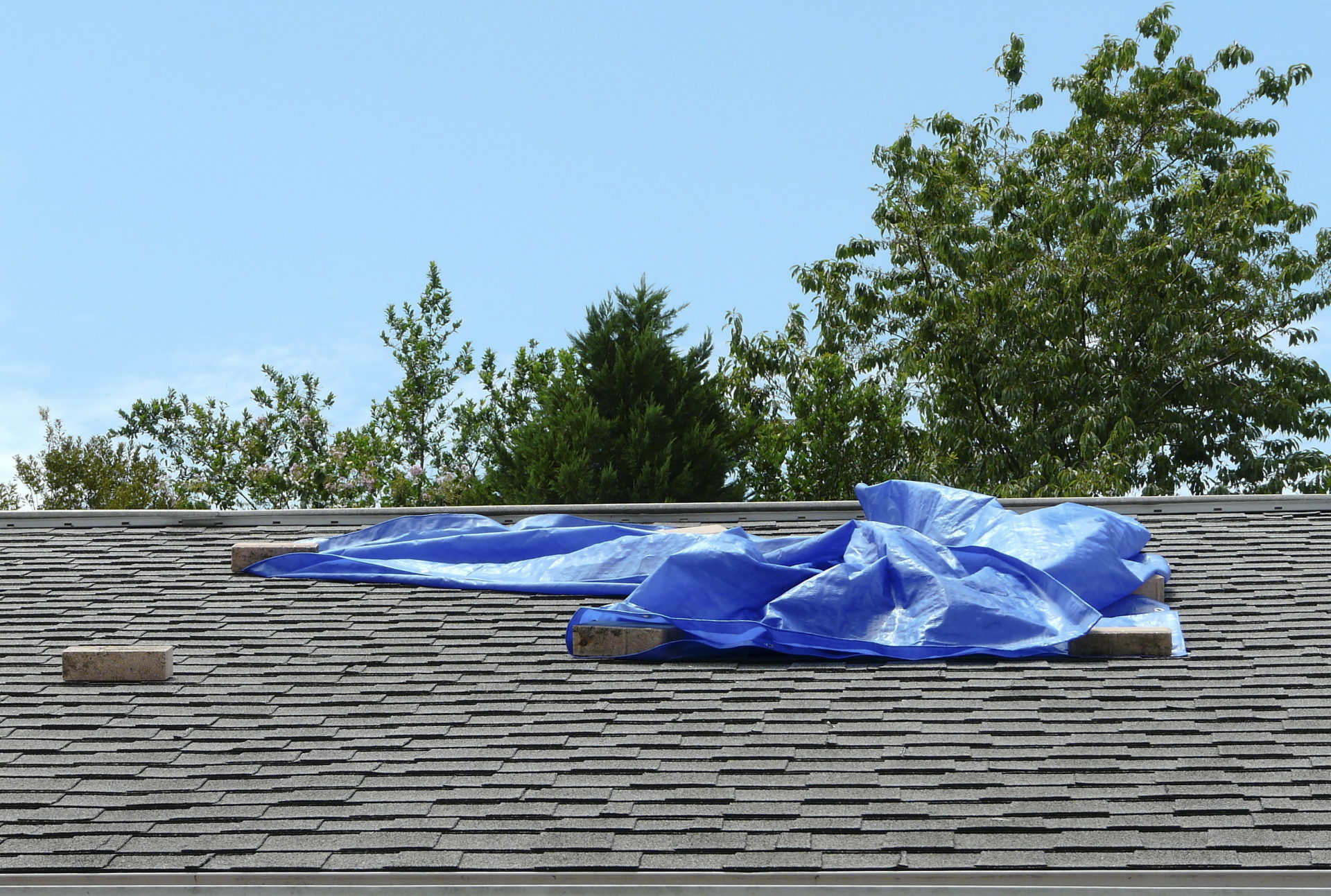
Storm damage repair after hail and tornado events: Douglas County sees two to four significant hail events per year, and eastern Nebraska experiences tornado outbreaks most springs. After a hail event, we conduct damage assessments for insurance documentation — mapping punctures and bruising on the membrane by zone, photographing storm damage evidence in context, and producing written reports that match insurance adjuster requirements. After the tornado outbreaks that have moved through the Omaha metro, we have handled emergency tarp work, debris-related membrane cuts, and parapet failures on buildings from North Omaha through Bellevue.
Repair Scope vs. Replacement Threshold
Not every repair call leads to a repair contract. If we walk a roof and the insulation saturation is above 25% of the total area, or if the membrane has widespread seam failure across multiple zones, we will tell the owner that repair is not the right scope — that every dollar spent on repair will be spent again within three to five years, and that the honest scope is replacement. That is not what every owner wants to hear, but it is the only assessment that serves the building.
For buildings where repair is genuinely the right scope, we write a repair authorization that specifies the repair method, the materials, the warranty we place on our work (two years on labor and materials for standard repairs), and the maintenance recommendation that extends the repair's service life. The Old Market warehouse buildings, the UNMC campus medical buildings where sections of newer membrane are in good condition while isolated penetrations have failed, and the Aksarben Village retail district where roofs are relatively young — these are legitimate repair buildings where the right repair extends asset life at a fraction of replacement cost.
Ice Storm and Winter Repair Protocols
Omaha's ice storms create a specific repair challenge. The metro sees one to three significant ice events per winter, and ice loading on flat commercial roofs — combined with blocked drains that allow melt water to refreeze at the drain bowl — creates conditions that stress flashings and drain collars. We carry heated equipment for winter repair work: propane torches rated for modified bitumen work in sub-zero conditions, and peel-and-stick flashing membrane that remains pliable to 0°F. We do not schedule field-weld TPO or EPDM repair in temperatures below 35°F — adhesives and heat welds require substrate temperatures in that range for a sound bond. For winter emergencies below that threshold, we tarp, dry-in temporarily, and schedule the permanent repair for the first workable window.
After ice storms, we get calls from industrial buildings along the river bottom near Eppley Airfield where roof drains have frozen solid and standing water is building up on the membrane. These are emergency calls we respond to same-day — getting a frozen drain cleared before the ice event ends and the melt load adds to the standing water is the difference between a drain service call and a ceiling collapse.
Frequently asked questions
How do I know if my Omaha commercial roof needs repair or full replacement?
The honest answer requires a roof walk and, if saturation is suspected, moisture core pulls. We will not tell you it needs repair if the insulation is wet across a significant area — that is the replacement threshold. We will not tell you it needs replacement if the membrane is in serviceable condition with isolated failures. We give you the written assessment either way so you can plan against it.
Do you repair roofs from other contractors?
Yes. We assess and repair commercial roofs regardless of who installed them — including buildings where we are seeing a manufacturer system for the first time. We note in our written assessment what system is in place, what warranty status it carries (if any), and whether the repair approach is compatible with maintaining that warranty.
What warranty do you put on your repair work?
Two years on labor and materials for standard commercial roof repair. For repair work that reinstates a manufacturer's system warranty — for example, a qualifying repair on a warranted GAF or Carlisle system — the manufacturer warranty terms apply. We document the repair method in a form that satisfies manufacturer requirements for warranty maintenance.
Get a written leak assessment for your Omaha commercial building.
We will walk the roof, identify the failure source, and write up the repair scope before any crew is dispatched. No guesswork, no patch-and-pray.
Ready to talk through a roof?
Tell us about the building and the roof problem. We'll document it and put a plan in writing — with an honest repair-vs-replace recommendation and no upsell pressure.