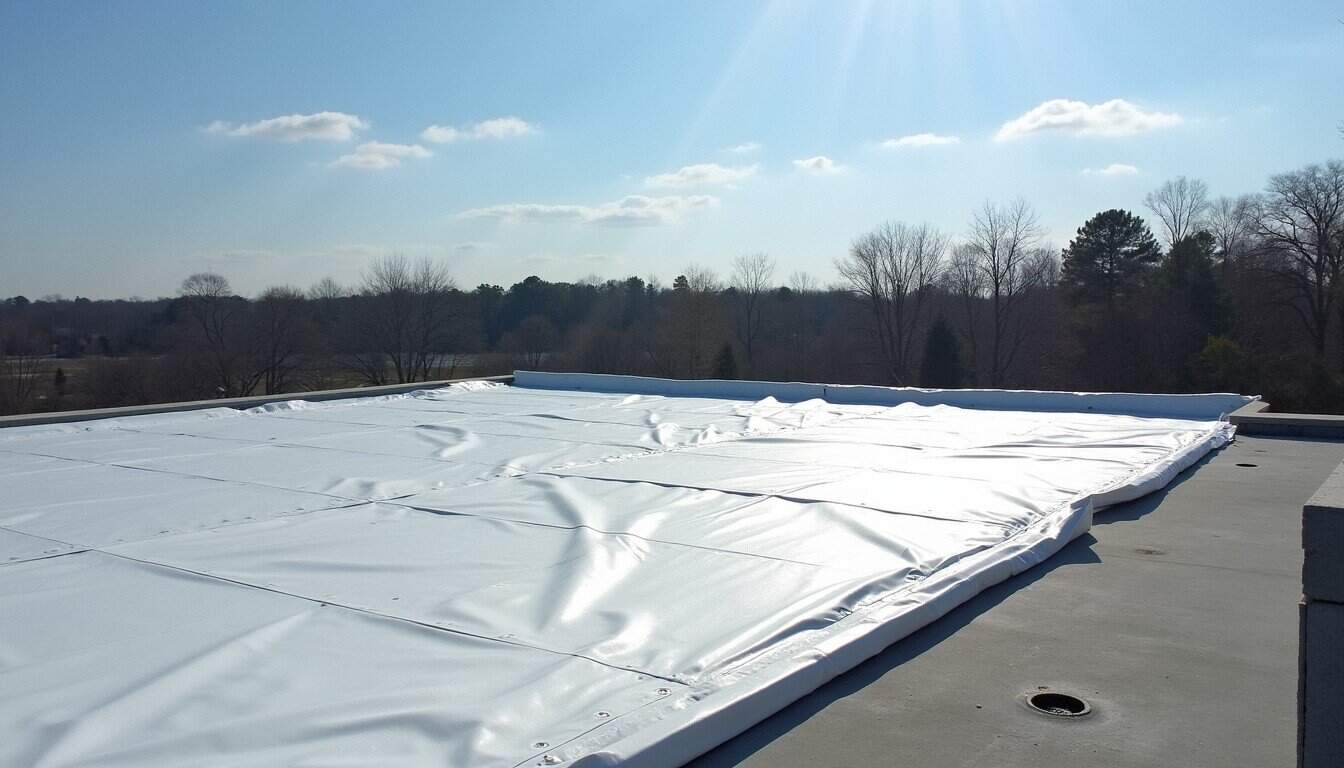
Omaha's commercial corridors span the I-80 and I-29 industrial belts, the Aksarben Village and Midtown Crossing redevelopment zones, the 180th Street and Dodge Street retail belts, and the Papillion and La Vista employment areas. Storm damage repair and insurance claim documentation in this market requires a contractor who can produce GPS-tagged hail impact maps, wind damage assessments, and a written scope in the format that commercial property adjusters use to evaluate a loss — beyond a repair estimate, the technical evidence a claim is built on.
We're a roofing contractor, not a public adjuster. We don't file the claim, negotiate the settlement, or represent the owner in a coverage dispute. What we provide is the damage assessment that identifies hail impact density, wind-related membrane displacement, flashing damage, and equipment damage — documented with GPS-tagged photography, impact measurements, and a written assessment formatted for the insurance adjuster reviewing the loss.
Hail damage to commercial TPO and PVC roofing membranes in Omaha is not always visible to the naked eye at ground level, and a cursory roof walkover can miss it. Hail impact patterns create membrane fatigue that accelerates seam failure and UV degradation — the visible effect can appear months or years after the storm, not immediately. We document hail impact density with close-range photography and, where needed, thermal imaging that reveals subsurface impact damage. That documentation gives the adjuster and the owner an accurate picture of the loss.
Wind damage claims at commercial properties in Omaha typically involve membrane displacement or blow-off at laps, flashings, and edge metal — the first areas to fail under sustained wind load. We document the displacement pattern and provide a written assessment that distinguishes storm-related damage from pre-existing conditions. That distinction matters to an accurate claim, and our documentation states it plainly.
Once a scope is approved, we complete the repair work to the documented specification. If a settlement comes back below the documented repair cost — which happens after events where multiple contractors are competing for claims capacity — we can provide additional photographs or an updated written assessment to support a supplemental request. We're your roofing contractor, not a public adjuster — we document and substantiate the roof damage so you and your adjuster work from an accurate scope.
Storm Damage & Insurance Claim Roofing Questions
How do you document hail damage on a commercial roof?
Our hail damage assessment includes GPS-tagged photographs of impact locations across the full roof surface, impact density measurement per section, membrane cross-section sampling at impact locations where physical evidence is warranted, and a written assessment that documents the impact pattern, estimated hail size based on impact geometry, and the membrane's remaining serviceable life post-impact. This documentation follows the format commercial property adjusters use to evaluate hail claims.
What does hail damage look like on a TPO or PVC commercial roof?
On TPO and PVC membranes, moderate hail (1" diameter and above) leaves impact impressions in the membrane surface — circular depressions where the hail compressed the membrane and underlying insulation. The impressions are often not visible without close-range inspection on a dry surface in low-angle light. The damage weakens the membrane at impact points, creating stress concentration locations that accelerate future seam and surface failures. Our hail documentation maps the impact density across the entire roof.
Can you work directly with my insurance company or adjuster?
Yes. We communicate directly with the adjuster during the damage assessment — walking the roof with them, answering technical questions, and supplying documentation if the submitted findings need supplementation. We're not the owner's negotiator in that conversation; we're the contractor who inspected the roof and can speak to what the inspection found.
What if the insurance settlement doesn't cover the full repair cost?
Supplemental requests are common in competitive storm markets. When a settlement comes in below documented repair cost, we can provide additional photographs or an updated written assessment to support a supplemental request the owner submits to their carrier. We don't manage the appeal or negotiate the outcome — that's a conversation between the owner (or their public adjuster, if one is retained) and the carrier — but we'll stand behind our documentation.
How quickly can you respond after a major storm event?
We prioritize post-storm response in Omaha. Emergency dry-in and temporary protection can typically be deployed within 24-48 hours of a major event — this stops active leaking while the full damage documentation is completed. A full damage assessment for insurance documentation is typically delivered within 3-5 business days of the initial site visit.
Ready to talk through a roof?
Tell us about the building and the roof problem. We'll document it and put a plan in writing — with an honest repair-vs-replace recommendation and no upsell pressure.