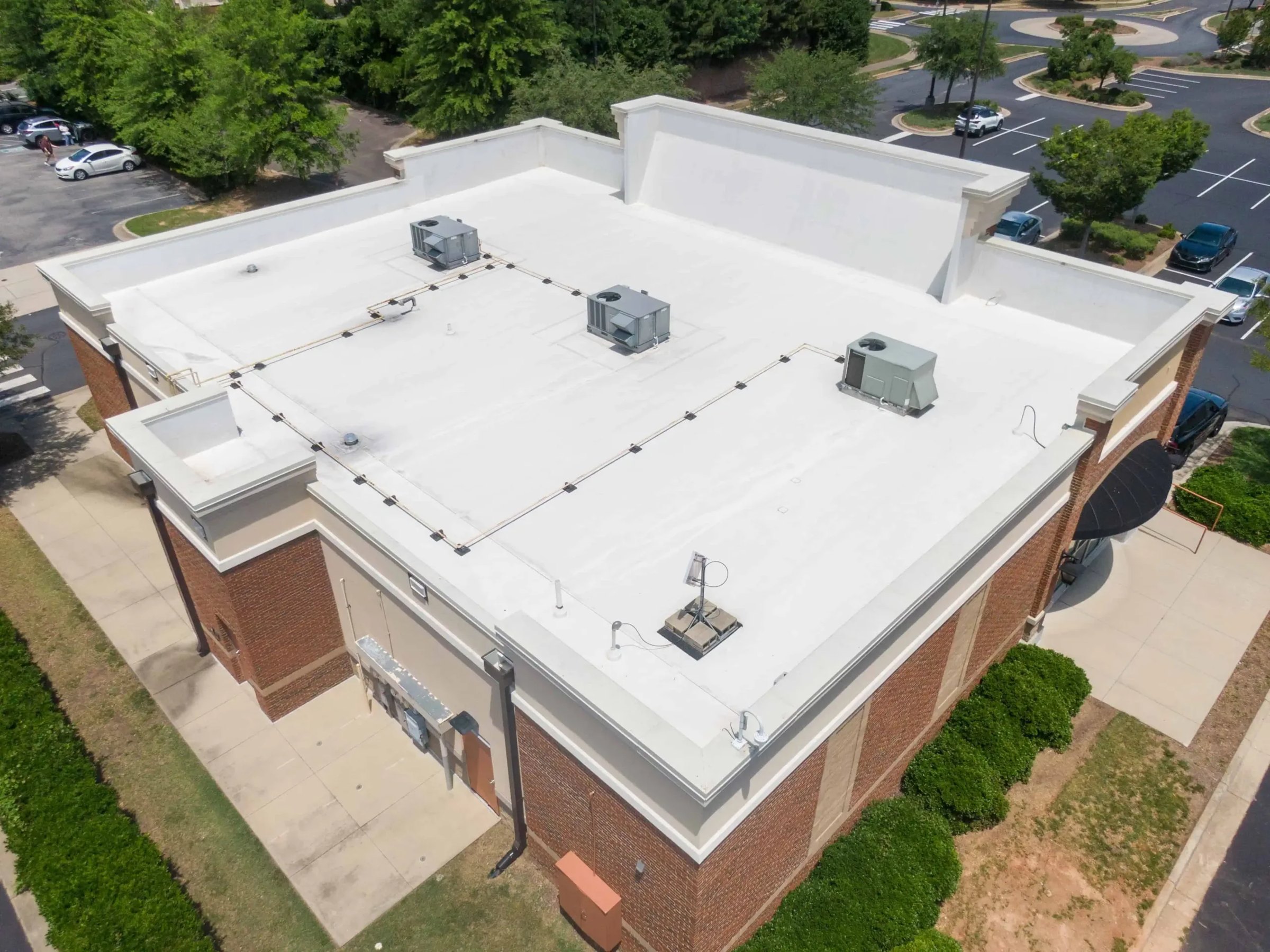
Omaha carries an unusual concentration of insurance-industry infrastructure for a metro this size — national carriers keep underwriting teams, claims offices, and adjuster pools based here, and Douglas County property owners deal with claims processes that reflect that presence. A commercial roof claim in Omaha moves through the same insurer channels whether the loss is spring hail on a warehouse along the I-80 corridor or wind damage to a retail roof off 180th Street. What determines the outcome isn't the carrier. It's the documentation the claim is built on.
We're a roofing contractor, not a public adjuster. We don't file the claim, negotiate the settlement, or represent the owner in a coverage dispute — that isn't our role. What we do is inspect the roof, document the damage to the standard an adjuster needs to see, and produce a repair scope that reflects the roof's actual condition rather than a guess made from the parking lot.
What a Commercial Roof Insurance Claim Requires
A commercial roof claim starts with proof: photographs, measurements, and a written condition assessment dated before repair work begins. The claims that move fastest through a commercial adjuster's queue are the ones with a complete inspection record attached from day one — impact locations mapped to a roof zone diagram, moisture readings where wet insulation is suspected, and photographs that separate storm damage from wear that predates the loss.
Most delays on commercial claims trace back to incomplete initial documentation, not to insurer resistance. A roof inspected only from the ground, or documented with a handful of phone photos, gives an adjuster very little to evaluate. We build the inspection record the way a commercial adjuster expects it — zone by zone, with reference photography and a written scope that ties every line item to a documented condition.
Documenting the Damage Before the Adjuster Arrives
We inspect the entire roof, beyond just the areas with visible damage, because a commercial policy covers the whole loss. On a membrane roof that means checking field seams, flashing terminations, curb penetrations, and drainage in addition to the obvious impact zones. Every finding gets photographed with a reference marker and logged against a roof diagram, so the report reads the same way whether the person reviewing it is the adjuster, the property manager, or us again in six months during a warranty question.
Moisture is part of the record on any claim involving membrane punctures or displaced flashing. Where water intrusion is possible, we run infrared or capacitance moisture scans and log wet insulation separately from the storm-impact zones — wet insulation replacement is frequently its own line item, and a claim that doesn't distinguish the two tends to come back underscoped.
Meeting the Adjuster on the Roof
When an adjuster schedules a site visit, we meet them on the roof. We walk the zones we documented in our report, point to the specific findings, and answer technical questions about membrane condition, installation age, and failure mode. We don't attend as the owner's advocate in a negotiation — we attend as the contractor who inspected the roof and can speak to what the inspection found. An adjuster who can verify the documentation against the physical roof in real time moves a claim forward faster than one working from a report they can't confirm in person.
Getting the Full Scope Right
A repair scope that lists only the storm-damaged membrane misses the parts of the job the building code requires anyway. If a section needs tear-off and current code calls for additional insulation R-value or a different fastening pattern than what's already installed, that belongs in the scope — along with the flashing and metal that has to be replaced to keep new work under manufacturer warranty and matching the surrounding roof. Leaving those items out doesn't shrink the job; it just means the owner pays for them separately after the claim has already closed.
Getting the full scope right means nothing legitimate is left off the list — not an inflated estimate, not padding, just an accurate accounting of what the damage actually requires. We itemize the condition and let the documentation carry the case.
When a Claim Comes Back Denied or Underpaid
A denied or underpaid claim is usually a documentation gap, not a final answer. If a carrier's initial inspection missed damage that our report identified, we can provide supplemental photographs, an updated condition assessment, or a second roof walk with the adjuster to review specific findings. We don't manage the appeal or negotiate the reconsideration — that conversation runs between the owner (or their public adjuster, if one has been retained) and the carrier — but we'll stand behind our documentation and supply whatever additional technical detail is needed to support it.
We're your roofing contractor, not a public adjuster — we document and substantiate the roof damage so you and your adjuster work from an accurate scope.
Frequently asked questions
Does insurance cover commercial roof replacement?
Coverage depends on the policy and the cause of loss. Most commercial property policies cover storm-caused damage — hail, wind, and related water intrusion — when the roof was in insurable condition before the loss. Whether the payout covers a repair or a full replacement depends on the extent of the damage and the policy's replacement-cost or actual-cash-value terms. We don't interpret policy language — that's a conversation for the owner and the carrier or broker — but our damage assessment documents whether the extent of the damage supports a repair scope or a replacement scope.
What is the process for a commercial roof insurance claim in Omaha?
A commercial roof claim generally moves through this sequence: the loss occurs, the owner reports it to the carrier, the carrier assigns an adjuster, and a roof inspection establishes the scope of damage. We fit into that sequence at the inspection and documentation stage — often before the adjuster's first visit, so there's already a written record when they arrive, and again during the adjuster's site visit if a joint inspection is requested.
What happens if my roof claim gets denied?
A denial is often based on incomplete initial documentation or a dispute over cause of loss — for example, whether roof deterioration is storm-related or pre-existing wear. If we didn't complete the original inspection, we can still assess the roof and provide a documented opinion the owner or their public adjuster can use to request reconsideration. We don't manage the appeal process itself.
How is repair versus replacement decided on an insurance claim?
That decision comes down to the extent and pattern of the damage, the age and remaining service life of the existing roof system, and whether a partial repair can be executed without voiding the manufacturer warranty on the surrounding roof. We document all three factors in our assessment so the owner and the adjuster are working from the same technical picture instead of a judgment call.
Do you work alongside public adjusters?
Yes. We regularly work alongside public adjusters that owners have already retained, providing the technical inspection report and repair scope they use to support the claim. We don't compete with that role or perform it ourselves — we produce the roof documentation a public adjuster, or a carrier's own adjuster, needs to evaluate the loss.
Need a Documented Roof Assessment for an Omaha Claim?
We inspect, document, and produce an adjuster-ready condition report and repair scope for commercial roofs across the Omaha metro and Douglas County.
Ready to talk through a roof?
Tell us about the building and the roof problem. We'll document it and put a plan in writing — with an honest repair-vs-replace recommendation and no upsell pressure.