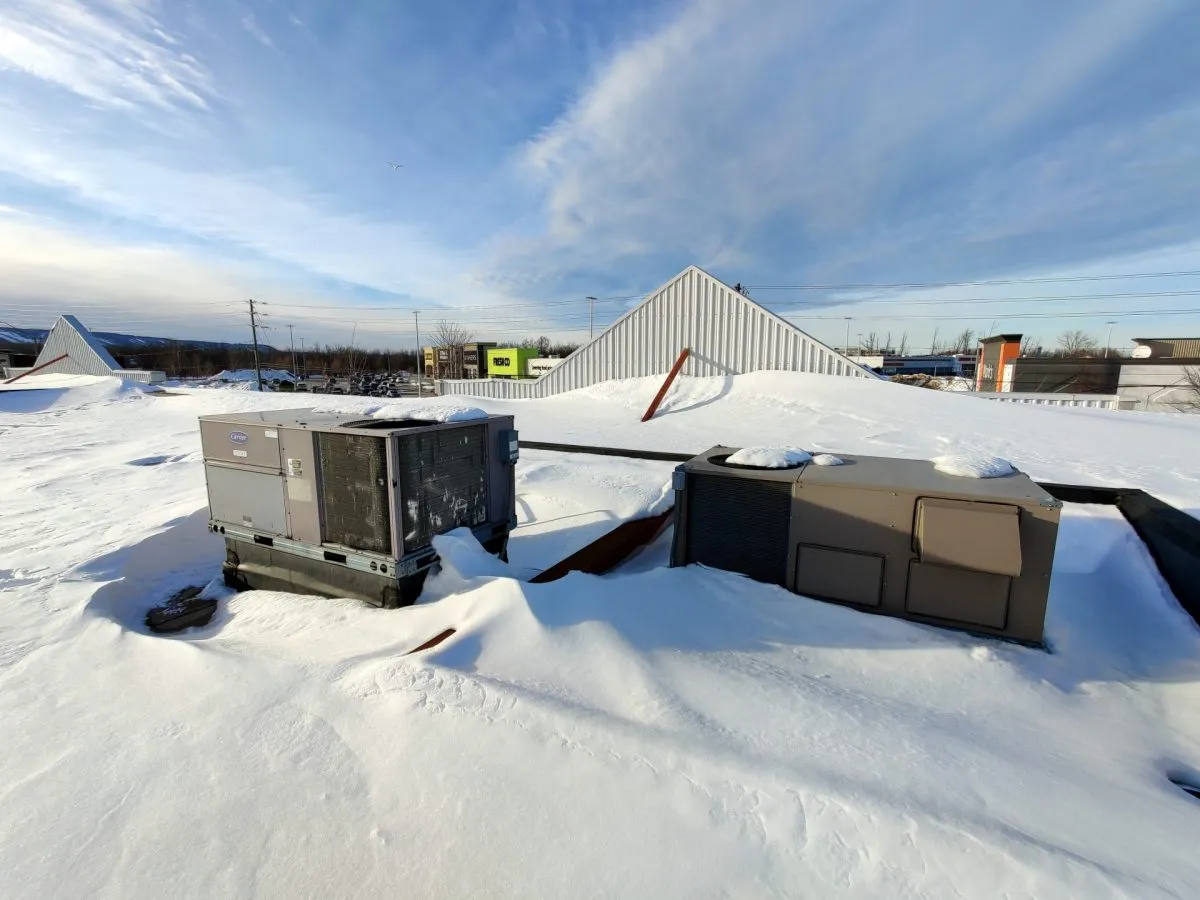
Plains winters put a different kind of stress on a commercial low-slope roof than a spring hailstorm does. Sustained snow load, rapid freeze-thaw cycling, and ice dams at drains and parapets are the recurring winter damage pattern across the Omaha metro, and the damage is frequently slower to surface and harder to document than storm-impact damage — a roof can be failing under a winter's worth of freeze-thaw stress for months before a leak becomes visible inside the building.
We're a roofing contractor, not a public adjuster. This page covers how we document snow and ice damage for an insurance claim. We don't file the claim or negotiate the settlement.
Winter Roof Damage in Omaha — Snow Load and Freeze-Thaw
Omaha winters bring repeated freeze-thaw cycling rather than one sustained deep freeze — daytime temperatures near or above freezing followed by overnight refreeze is the pattern that does the most damage to a membrane roof over a season. Water that gets under a compromised seam or through a small membrane defect freezes, expands, and widens the defect; the next thaw lets more water in, and the cycle repeats. On flat commercial roofs, standing water at low points or clogged drains compounds the problem, since ponded water freezes into ice that adds significant dead load exactly where the roof structure is least able to shed it.
Ice Dams and Drainage Failure
Ice dams on a commercial low-slope roof most often form at drains, scuppers, and parapet transitions where meltwater backs up against an obstruction and refreezes. A drain that's partially blocked by debris or that has settled below the surrounding membrane plane is a common ice-dam trigger — meltwater can't clear the drain fast enough during a thaw cycle, refreezes overnight, and the dam grows with each cycle until it's forcing water backward under flashing or over parapet walls. We document ice-dam locations, the drainage condition that allowed them to form, and any membrane or flashing damage caused by the backed-up water.
Documenting Snow and Ice Damage for a Claim
Winter damage documentation looks different from a hail or wind report because the damage is rarely a single point-in-time event — it's cumulative over a season or multiple seasons. We document standing ice load locations, drain and scupper condition, membrane seam integrity at known problem areas, and any evidence of water intrusion at parapet or wall transitions. Where we suspect wet insulation from a season of freeze-thaw cycling, we run moisture scans to map the extent, since wet insulation under an intact-looking membrane is often the largest hidden cost in a winter damage claim.
Structural vs Membrane Damage After a Winter Event
A heavy, wet snow load event can raise structural questions that a hail or wind claim usually doesn't — deflection at purlins, ponding that exceeds the roof's designed drainage capacity, or a load that approaches the structure's rated capacity. When a snow event is severe enough to raise those questions, we document visible structural indicators (deflection, water staining patterns consistent with ponding, membrane stress at structural members) and recommend a structural engineer review when the findings warrant one — that assessment is outside a roofing contractor's scope and needs an engineer's sign-off.
Timing a Winter Claim
Because freeze-thaw damage accumulates rather than announcing itself in a single event, we recommend a documented roof inspection at the first sign of interior water staining, visible ice damming, or after any winter storm that deposits unusually heavy snow load. Waiting until spring thaw to document winter damage makes it harder to establish which portion of the damage is attributable to a specific event versus general seasonal wear — an inspection closer to when the damage occurred produces a stronger record.
Frequently asked questions
How does freeze-thaw cycling damage a commercial roof membrane?
Water that gets under a compromised seam or through a small membrane defect freezes and expands, widening the defect. The next thaw lets more water in, and the cycle repeats through the winter — this is why freeze-thaw damage tends to be cumulative and progressive rather than a single-event failure.
What causes ice dams on a flat commercial roof?
Ice dams typically form at drains, scuppers, and parapet transitions where meltwater backs up against a partially blocked or poorly positioned drain and refreezes overnight. The dam grows with each freeze-thaw cycle until it's forcing water backward under flashing or over parapet walls.
Can snow load cause structural damage to a commercial roof?
A heavy, wet snow load event can raise structural concerns — deflection at purlins, ponding beyond designed drainage capacity, or loads approaching the structure's rated capacity. When our inspection finds indicators consistent with a structural issue, we recommend a structural engineer review, since that assessment is outside a roofing contractor's scope.
When should I get a roof inspected for winter damage?
At the first sign of interior water staining, visible ice damming, or after any storm that deposits unusually heavy snow load — waiting until spring thaw makes it harder to establish which portion of the damage is attributable to a specific winter event.
Is winter roof damage covered differently than storm damage?
Coverage terms depend on the specific policy and how the carrier classifies the cause of loss — that's a question for the owner and their broker or carrier. What we provide is the documented condition record: drainage condition, ice-dam evidence, moisture scan results, and membrane condition, which supports whatever claim is filed.
Related Claims Pages
This page covers one type of loss. For the full commercial roof insurance claims process in Omaha — what documentation an adjuster needs, how the full-scope repair estimate gets built, and what to do with a denied or underpaid claim — see our commercial roof insurance claim assistance page.
Need Winter Roof Damage Documentation for an Omaha Claim?
We inspect and document snow load, ice dam, and freeze-thaw damage for commercial roofs across the Omaha metro and Douglas County.
Ready to talk through a roof?
Tell us about the building and the roof problem. We'll document it and put a plan in writing — with an honest repair-vs-replace recommendation and no upsell pressure.