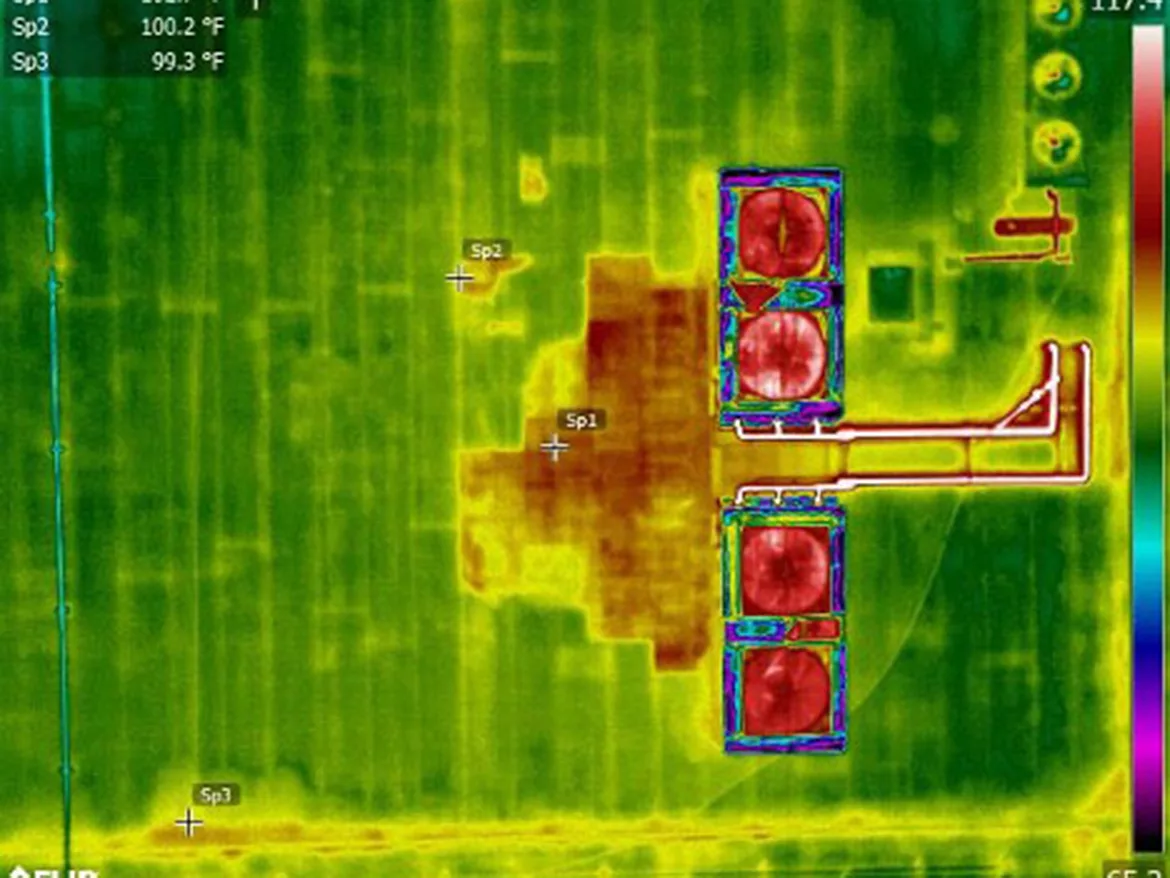
Independent field QA inspection during or after another contractor's installation in Omaha — seam integrity, flashing details, fastener pattern, and manufacturer warranty eligibility verified against the specification, with a written findings report delivered within five business days.
Third-party quality inspection is a specific technical engagement distinct from owner's representative work: we are retained to walk a roof at a defined point in another contractor's installation, document findings against the manufacturer's published installation standard and the project's specification, and deliver a written report. There is no ongoing advisory relationship — one engagement, one deliverable, one clear scope.
We conduct QA inspections on Omaha commercial projects for several types of clients. Out-of-state owners who have engaged a local contractor and want an independent field assessment before accepting substantial completion. General contractors who need documented third-party QA on a roofing subcontractor's installation before they sign off on pay applications. Asset managers whose portfolio underwriting requires third-party QA certification for projects above a defined contract value. Each client gets the same inspection standard and the same written deliverable — what changes is the context the client uses it in.
The inspection is documented to manufacturer-inspection standard. Every finding is photographed, keyed to the roof zone diagram, and cited against the specific manufacturer detail requirement or specification section the condition departs from. Findings are categorized as: warranty-jeopardizing (requires correction before manufacturer warranty inspection), specification deviation (required correction per contract documents), or documented observation (no immediate corrective action required, recorded for the asset file). The delivered report can be handed directly to the installing contractor as a correction-required list.
What the Inspection Covers and How
Seam integrity testing: We run probe tests on a representative sample of heat-welded seams — minimum one probe test per 500 linear feet of seam, plus every seam in a flashing transition zone, every seam within 12 inches of a penetration, and every T-junction. Probe testing detects cold welds that pass visual inspection. Cold welds are the most common warranty-jeopardizing finding on Omaha TPO and PVC installations and are responsible for a disproportionate share of the freeze-thaw seam failures the metro sees in February and March. On a 100,000 sq ft installation, we typically test 800-1,200 linear feet of seam.
Flashing detail verification: We photograph each parapet, penetration, drain, curb, and expansion joint against the manufacturer's published detail drawing for that building's system. Nebraska freeze-thaw cycling makes parapet flashings and expansion joints the highest-failure-rate details in the Omaha climate — insufficient turn-down height, inadequate lap at the base flashing, and absent or undersized cover flashing are the conditions we find most frequently on inspections here. Missing or undersized flashing dimensions are the single most common warranty-jeopardizing finding category on Omaha commercial projects.
Fastener pattern verification: For mechanically attached systems, we inspect the fastener pattern at field, perimeter, and corner zones against the approved wind-uplift design. Perimeter and corner zones require higher density than the field zone — Exposure B and C sites on the West Omaha suburban ring and near Eppley Airfield require the most conservative perimeter patterns. We identify field-zone pattern installed uniformly across perimeter zones on roughly one in four Omaha projects we inspect.
Insulation and cover board spot verification: At drain sumps, accessible penetrations, and any location where inspection port access is available, we verify the insulation stack against the specification — polyiso type and thickness, cover board type, fastener pattern through the insulation. Substituted insulation that does not meet the specified R-value or the manufacturer's system compatibility requirement creates both energy code and warranty issues that are expensive to correct after membrane cover.
Manufacturer Warranty Inspection Support
Major manufacturer NDL warranty inspections in the Omaha market are conducted by the manufacturer's own field representative or factory-credentialed inspector. These inspections produce punch lists — not pass-fail verdicts at the building level. Punch items must be corrected within the manufacturer's cure period, typically 30-90 days after the inspection, before the warranty is issued.
We support building owners and general contractors through warranty inspections in two ways. Pre-inspection: we walk the roof and identify the conditions most likely to appear on the manufacturer's punch list so the installing contractor can correct them before the manufacturer inspector arrives. Nebraska-specific conditions that Omaha manufacturer inspectors flag most consistently — parapet flashing turn-down short of specification, drain flashing under-torqued at the clamping ring, seam legs compressed at penetration clusters — are detectable before the inspection and correctable in a day or two of crew time. Post-inspection: we scope and execute the required remediation, then submit completion documentation to the manufacturer's warranty desk within the cure window.
The pre-inspection walk reduces punch-list length and accelerates warranty issuance. A building owner who receives a clean warranty inspection on first review saves weeks of remediation scheduling and manufacturer coordination that a long punch list generates.
Report Format and Deliverable
Every third-party QA inspection delivers a written report within five business days of the field visit. The report includes: an executive summary with overall installation quality assessment and a count of findings by category (warranty-jeopardizing, specification deviation, observation), the roof zone diagram with every finding keyed by number, a finding-by-finding detail section showing photograph, location, description, the applicable specification or manufacturer requirement, and the recommended corrective action, and a findings matrix — a sortable table organized by zone, finding category, and priority that works as a contractor work order list.
The matrix format is intentional: the installing contractor can pull the findings matrix, assign each item to a crew, and return completion documentation for each finding. For clients using the inspection as warranty inspection support, the same document serves as the pre-inspection correction list submitted to the manufacturer's field rep.
Frequently asked questions
Can you inspect an installation that is already fully complete?
Yes, but the utility is reduced compared to mid-installation inspection. The highest-value inspection window is during production — before the membrane covers the insulation, while seams and flashings are still fully accessible for probe testing. Post-completion inspection surfaces visible deficiencies and tests exposed seams, but conditions buried under completed membrane or covered by counterflashing cannot be assessed without destructive investigation.
Do you share inspection findings directly with the installing contractor?
The report goes to the client who retained us — the building owner or general contractor. The client decides whether to transmit the report to the installing contractor, issue it as a correction-required notice, or use it internally. We do not communicate findings to the installing contractor without the client's authorization.
What prepares your inspectors to conduct manufacturer warranty inspection support?
Our project managers hold active credentials with GAF, Carlisle, Johns Manville, Sika Sarnafil, Versico, and Firestone and have participated in manufacturer warranty inspections as the credentialed applicator on projects across the Omaha metro. We know what each manufacturer's field representative looks for on an Omaha inspection — including the climate-specific details that manufacturer inspectors in Nebraska flag above the published national standard.
How long does a QA inspection take on a 100,000 sq ft Omaha commercial roof?
Full seam probe coverage, flashing detail inspection, fastener pattern verification at field and perimeter zones, and zone-by-zone condition documentation: approximately one full day on-site for a standard 100,000 sq ft installation. Buildings with high equipment density, multiple roof levels, or complex geometry take longer. We estimate after reviewing project documentation and can confirm the schedule before mobilization.
Need an independent QA inspection on an Omaha commercial roof installation?
We will test seams, verify flashing details against the manufacturer's standard, confirm fastener patterns, and deliver a written findings report — formatted so the installing contractor can act on it directly before the warranty inspection.
Ready to talk through a roof?
Tell us about the building and the roof problem. We'll document it and put a plan in writing — with an honest repair-vs-replace recommendation and no upsell pressure.