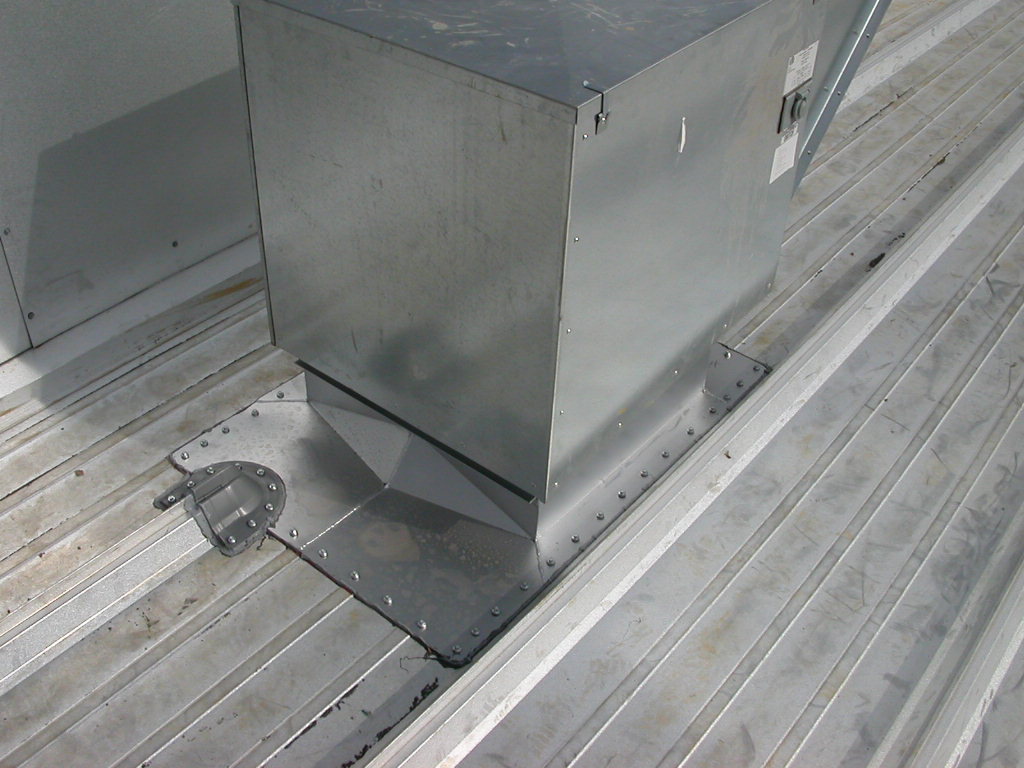
Skylight leaks on Omaha commercial buildings are usually curb flashing failures, not glazing failures. We diagnose the source, repair the curb flashing and surrounding membrane transition, reseal the glazing gasket where needed, and deliver a written service record — not a temporary caulk band.
Commercial skylights fail at two locations: the glazing assembly and the curb flashing. The glazing assembly — the glass or polycarbonate unit in its frame — can develop failed gaskets, cracked panels, or condensation channels that let water into the building. But in Omaha's climate, the more common failure is at the curb: the raised frame that holds the skylight above the roof plane, which needs a properly integrated flashing transition to the surrounding membrane.
Omaha's freeze-thaw cycling stresses skylight curb flashings in the same way it stresses every parapet termination — repeated contraction and expansion at the membrane-to-curb interface opens the joint over time. A curb that was correctly flashed in 2010 may have an open joint by 2022 that passes water into the ceiling cavity below the skylight, appearing as a stain at the ceiling near the skylight unit. The stain is near the skylight — close enough that the owner assumes the glazing is failed — but the actual entry is at the curb base flashing.
We repair commercial skylights across the Omaha metro. The Aksarben Village mixed-use buildings, the office and retail buildings along the 72nd Street corridor, and the atrium-style corporate buildings in the Mutual of Omaha and Berkshire Hathaway campus clusters all have skylights that require periodic curb flashing maintenance. We integrate the skylight repair with the surrounding flat-roof membrane using manufacturer-compatible materials.
Diagnosing Skylight Leaks Correctly
Before any repair, we determine whether the leak is at the curb flashing, the glazing assembly, or both. The diagnostic approach: first, inspect the curb flashing visually for open joints, lifted base flashing, failed sealant, and membrane separation at the curb perimeter. Second, inspect the glazing unit for cracked glass or polycarbonate, failed gasket seals, and clogged condensation weep channels.
Controlled water testing at the curb before testing the glazing usually identifies the primary source. If water applied at the curb base flashing produces interior water passage, we repair the curb before testing the glazing — a glazing repair on an active curb leak does not stop the leak. If the curb tests watertight and water applied at the glazing transition produces water passage, the glazing assembly is the primary source.
Some skylights have failed at both — curb flashing opened first, water saturated the curb assembly, and the interior water passage eventually wicked into the glazing frame and degraded the glazing gasket. In that case, both require repair, and we sequence curb work first.
Curb Flashing Repair — The Most Common Skylight Repair Scope
Curb flashing repair involves removing the existing base flashing membrane at the curb perimeter, installing new manufacturer-compatible flashing membrane bonded to the curb face and stripped into the field membrane, and re-installing the counterflashing that overlaps the base flashing at the curb cap.
For TPO field membrane systems — the most common commercial flat-roof configuration across the Omaha metro — we use TPO-compatible flashing membrane heat-welded to the field membrane and bonded to the curb face with TPO-compatible adhesive. The counterflashing is re-set with silicone sealant at the top edge. The completed detail matches manufacturer specifications for curb flashing on the applicable membrane system.
On older EPDM systems, curb flashing repair uses EPDM-compatible seam tape and bonding adhesive. Modified bitumen systems use compatible cold-applied or torch-applied flashing cap sheet. We do not install cross-compatible materials — a TPO patch over an EPDM field membrane is not compatible and will fail at the bond line within one or two seasons in Omaha's freeze-thaw climate.
Glazing Repair and Gasket Restoration
When the glazing assembly is the failure source — cracked panels, failed gaskets, or blocked weep channels — repair depends on the skylight manufacturer and the age and type of glazing unit. Modern commercial skylights from Velux, Wasco, Naturalight, and other commercial manufacturers use replaceable glazing gaskets and accessible condensation channels that are serviceable in the field. Older units with sealed-perimeter glazing may require replacement of the glazing unit rather than gasket repair.
We assess glazing condition as part of the diagnostic inspection and provide the building owner with a clear recommendation: repair the gasket and weep channels (applicable to most modern commercial units), replace the glazing unit (applicable where the glazing itself is cracked or the gasket is no longer available), or replace the entire skylight assembly where the unit is beyond serviceable life.
Skylight glass replacement in occupied commercial buildings is coordinated with the facility manager to protect building occupants from falling glass risk during the removal and reinstallation sequence.
Frequently asked questions
How do I know if the leak is from the skylight curb or the glazing?
The location of the interior water stain relative to the skylight gives a preliminary indication: staining at the ceiling perimeter near the curb typically points to curb flashing failure; staining that appears to track down from the center of the glazing unit points to glazing or condensation weep channel failure. But interior stain location is only a starting point — we confirm the source with controlled water testing before committing to a repair scope.
Can skylight curb flashing be repaired without replacing the skylight?
Yes, in most cases. The skylight unit and the curb flashing are separate assemblies. Failed curb flashing is repaired without disturbing the glazing unit. The glazing unit stays in place while we remove and re-install the base flashing and counterflashing at the curb perimeter. Replacement of the skylight unit itself is only necessary when the glazing or frame is failed beyond repair.
Do you repair skylights on all commercial roof system types?
Yes. We work on TPO, EPDM, PVC, modified bitumen, and built-up roof systems. The curb flashing repair material changes to match the field membrane system — we use system-compatible materials in every case, not generic sealant repairs that are not compatible with the membrane's long-term thermal movement. Skylights on modified bitumen or built-up systems in older Omaha commercial buildings typically require a more extensive base flashing removal and re-work sequence, which we scope after the initial inspection.
Skylight leak or curb failure at your Omaha commercial building?
We find the source, repair the curb flashing and glazing with membrane-compatible materials, and document the repair — no temporary caulk fixes.
Ready to talk through a roof?
Tell us about the building and the roof problem. We'll document it and put a plan in writing — with an honest repair-vs-replace recommendation and no upsell pressure.