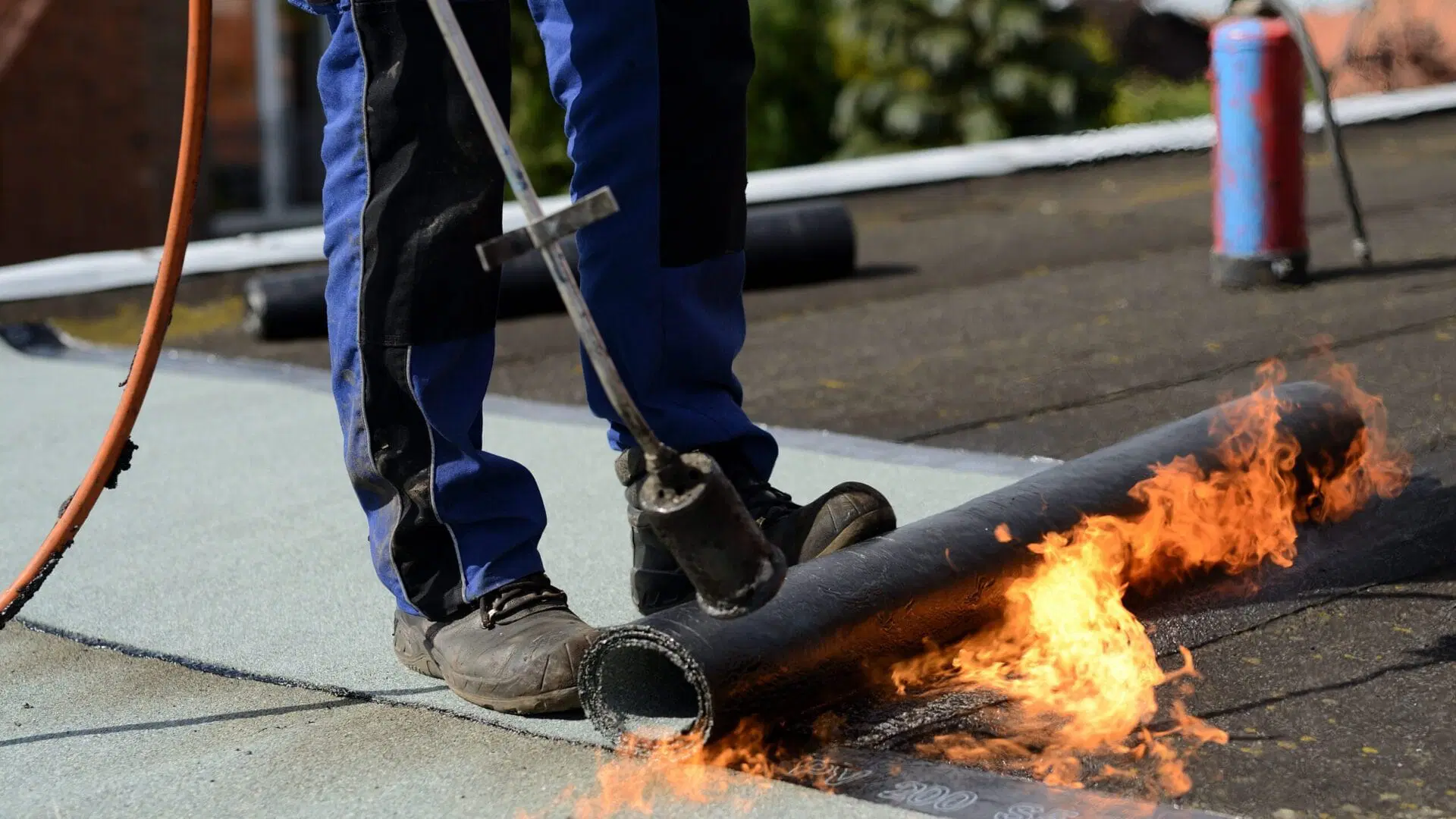
Modified bitumen is the bridge between the original built-up roofing systems that covered most of Omaha's pre-1980 commercial inventory and the single-ply membranes that dominate new construction today. A significant portion of the Omaha commercial roof inventory is still on modified bitumen — some of it approaching 30 years in service.
Modified bitumen roofing covers a meaningful share of the Omaha commercial building inventory, particularly in the older building stock along the Downtown core, the North Omaha industrial zone, and the 1980s-era office and warehouse buildings along the I-80 corridor. Many of these systems are approaching or past the end of their design life — a 20-year modified bitumen roof installed in 1995 was due for replacement by 2015, and systems pushed beyond their design life through deferred maintenance are now the most common emergency repair calls we receive.
We install, repair, and recover modified bitumen systems using torch-applied, cold-applied, and self-adhered application methods. Torch-applied modified bitumen (APP or SBS polymer-modified) is the dominant method for Omaha commercial work — it produces a fully fused, mechanically continuous sheet that handles freeze-thaw cycling and the Nebraska winter better than cold-adhesive-applied systems. Cold-applied systems are specified for buildings where open-flame torch work is not permitted — occupied medical buildings, certain chemical environments, and buildings where the hot-work permit requirements are prohibitive.
Modified bitumen's defining performance characteristic is flexibility. SBS (styrene-butadiene-styrene) polymer-modified bitumen remains flexible at low temperatures — down to -25°F in standard SBS formulations — which matches the Omaha winter. APP (atactic polypropylene) polymer-modified bitumen is harder at low temperature but more resistant to heat-related creep in the July heat load. In the Omaha climate, SBS is the standard specification for multi-ply systems where low-temperature performance is the primary concern.
Modified Bitumen in the Omaha Commercial Inventory
Downtown and Old Market: The pre-1980 Downtown commercial buildings — office blocks along Farnam and Harney Streets, the warehouse conversions in the Old Market district, the older retail buildings south of the ConAgra campus — were originally built on multi-ply built-up roofing. Many were recovered or replaced in the 1990s and 2000s with modified bitumen systems that are now in the 20-to-30-year range. These are active replacement candidates. The Old Market's historic warehouse buildings require special care around historic masonry at parapet walls — we work with the historic preservation review requirements when applicable.
North Omaha Industrial Zone: The manufacturing and distribution buildings along the Missouri River bottom, from the ConAgra grain facilities to the general industrial buildings north of the downtown core, run a mix of original BUR and modified bitumen from the 1980s through 2005. The open-exposure conditions and the 2020 derecho damage make this zone one of the more active replacement corridors in the metro.
1980s-era office and industrial along I-80 / Dodge: The suburban buildout along Dodge Street from 60th to 120th and the I-80 industrial parks west of the river bridge are heavily modified bitumen — mostly 1985-2000 construction now hitting or past the first replacement cycle. Recover with TPO over a dry modified bitumen substrate is a viable and cost-effective option when the insulation is dry.
Ready to talk through a roof?
Tell us about the building and the roof problem. We'll document it and put a plan in writing — with an honest repair-vs-replace recommendation and no upsell pressure.