Omaha's older commercial inventory — Downtown, Midtown, and the pre-1980 industrial stock along the Missouri River corridor — carries a significant BUR inventory. We inspect, repair, recover, and replace built-up roofing systems and give owners an honest account of what the system actually needs.
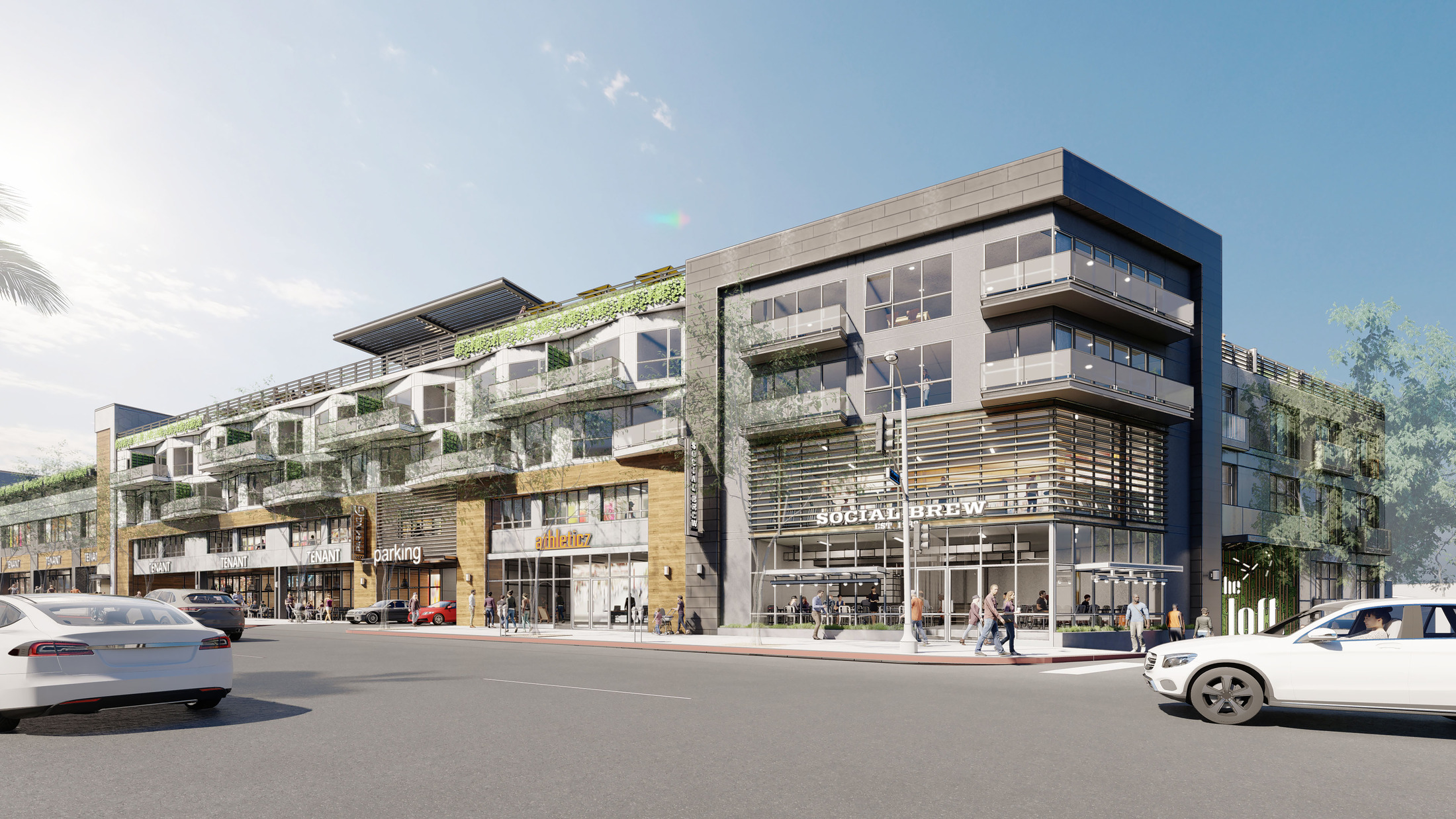
Omaha's Blackstone District, the Midtown Crossing development near 33rd and Farnam, and the continuing build-out of the North Downtown neighborhood around TD Ameritrade Park have established a clear pattern: mixed-use buildings are now the dominant form of urban infill in Nebraska's largest city, and the roofing requirements that accompany them are fundamentally different from the standalone commercial and residential work that characterized Omaha construction a generation ago. A building with a pharmacy and coffee shop at street level, three floors of medical office above, and a rooftop terrace at the top serving the penthouse units requires a roofing system that performs at the intersection of commercial, institutional, and residential codes — simultaneously, without compromise.
Nebraska's climate profile creates a roofing stress environment that Omaha mixed-use developers underestimate at their own expense. The city sits in a zone of high hail frequency, with significant storm events occurring multiple times each spring. Thermal swings between January lows below zero and July highs above 95°F stress every component of the roof assembly: membrane field seams, flashing terminations at parapet walls, walkway pad edges, and the sealant beads around rooftop unit curbs. For mixed-use buildings with multi-level rooflines — where a retail podium roof sits below a residential tower, and a rooftop amenity deck sits above the mechanical penthouse — managing differential thermal movement between those levels is a design challenge that requires explicit detailing, not assumptions.
Green roof programs in Omaha have gained traction as the city's stormwater management requirements have tightened under its MS4 permit obligations. Mixed-use developments in the Aksarben Village area and along the South 72nd Street corridor have incorporated green roof components as a strategy for managing on-site stormwater retention and earning green building certification points that support tax increment financing applications. The root-resistant waterproofing systems, drainage composites, and filter fabrics beneath an extensive sedum roof must be specified with Nebraska's freeze-thaw cycle in mind — a green roof installed with improperly rated drainage composite will compress under freeze pressure and lose its flow capacity over the first two winters, creating ponding conditions that load the structural deck and eventually saturate the growing medium.
Fire-rated assembly documentation is a consistent friction point in Omaha mixed-use permitting, particularly for projects that combine B, M, and R occupancies within a single structure. The City of Omaha's building department requires that the roof-ceiling assembly separating each occupancy class carry documented UL or FM listing numbers that match the actual installed configuration. Substituting insulation thickness, fastener spacing, or deck type from a tested assembly — even with equivalent R-value or structural performance — voids the listing and requires a formal engineering evaluation to restore compliance. Roofing contractors who submit complete assembly data sheets as part of the permit package move projects through review significantly faster than those who treat documentation as an afterthought.
The waterproofing transition between commercial and residential uses in Omaha mixed-use buildings has a specific condensation risk that varies by building orientation and HVAC zoning strategy. South and west-facing roof fields over commercial floors that are separately conditioned from the residential floors above create potential for interstitial condensation when the vapor drives reverse between heating and cooling seasons. A vapor retarder placed at the wrong position in the assembly relative to the dew point creates a concealed moisture accumulation zone that won't be visible until deck corrosion or insulation saturation is advanced. The fix requires demolishing the assembly and rebuilding it correctly — a cost that proper vapor analysis at the design stage eliminates entirely.
Noise isolation from commercial tenants is a functional requirement in Omaha mixed-use buildings near the Old Market entertainment district and along the Harney Street corridor. Rooftop mechanical systems serving restaurant, gym, or retail tenants generate both structural-borne vibration and airborne noise that travels through the building envelope if not isolated at the point of origin. Properly isolated equipment curbs — using spring-type or elastomeric vibration isolators sized to the equipment load — combined with flexible duct connectors at the roof penetration are the standard approach to preventing mechanical noise from becoming a residential tenant complaint. These details are inexpensive to install correctly during construction and expensive to retrofit after tenants are in residence and noise complaints have begun.
Omaha's mixed-use adaptive reuse pipeline includes former warehouses and industrial buildings in the Near North Side and Little Bohemia neighborhoods where existing structural decks were not designed for the additional live loads of rooftop amenity programming. A developer who wants a fourth-floor rooftop terrace with pavers, planters, and a pergola on a building originally constructed for light manufacturing needs a structural engineer's review of deck capacity before a roofing contractor is even engaged. The roofing system specification — choice of assembly, drainage composite weight, paver thickness — flows from the structural load limits, and a roofing contractor who develops a specification without that input is building toward a potential liability event.
Long-term maintenance governance in Omaha mixed-use properties benefits from the relatively organized commercial property management infrastructure that has developed in the city's urban renewal districts. The Blackstone and Midtown Crossing associations have established precedents for building-wide maintenance agreements that cover roof systems regardless of individual tenant ownership boundaries. That institutional framework is worth leveraging: a developer who builds a new mixed-use asset in one of those districts should negotiate a maintenance agreement with the district's preferred vendor panel and incorporate it into the lease and HOA documents from the start, ensuring the roof never falls into the gap between competing ownership interests.
The most important single decision in a Omaha mixed-use roofing project is engaging the roofing contractor during schematic design rather than at permit-ready construction documents. Early contractor input on penetration coordination, drain placement, curb sizing, and assembly sequencing relative to the general contractor's schedule prevents the field conflicts — abandoned penetration sleeves, inadequate drain sumps, curbs placed over structural beams that prevent proper flashing — that consistently produce change orders on Omaha urban infill projects. A design-assist or pre-construction agreement with the roofing contractor is an investment in schedule certainty that pays for itself on any project above three stories.
- What membrane type performs best on Omaha mixed-use roofs given the hail and thermal swing exposure?
- Sixty-mil or 80-mil TPO is the most common specification for new mixed-use construction in the Omaha market because it offers reflective surface performance, strong heat-weld seam integrity, and documented impact resistance in RICOWI hail studies. For recover applications or where higher mass is preferred, APP modified bitumen with a granular cap sheet provides good impact resistance and long service life. Either system should be installed with full perimeter and field fastening patterns designed for Omaha's wind uplift exposure category.
- How does Omaha's MS4 stormwater permit affect rooftop design for mixed-use buildings?
- Omaha's stormwater management program requires that new development and substantial redevelopment demonstrate on-site management of a portion of the design storm volume. Green roofs and permeable rooftop surfaces can contribute to that retention requirement and may allow a reduction in on-site detention pond sizing, which is often more valuable per square foot than the green roof cost itself. A civil engineer should model the stormwater credit before the roof design is finalized to capture the full benefit of the investment.
- What is the standard process for coordinating rooftop mechanical equipment placement on an Omaha mixed-use project?
- Best practice is a rooftop equipment coordination drawing produced jointly by the mechanical engineer and the roofing contractor before structural framing begins, showing curb locations, drain and scupper positions, walkway pad routes, and equipment clearances. That drawing is used to set curb blocking in the structural frame, place conduit sleeves before the deck is poured or erected, and sequence the roofing trade relative to the mechanical rough-in. Projects that skip this coordination step routinely discover conflicts during construction that require expensive structural modifications or drainage redesign.
- Can a rooftop terrace be added to an Omaha mixed-use building during construction without redesigning the waterproofing system?
- Only if the structural deck was designed for the additional load from the outset. Adding a terrace mid-construction typically requires a structural deck capacity review, potential shoring modifications, and a complete redesign of the waterproofing assembly to accommodate the protected membrane or pedestal paver system appropriate for occupied terraces. The waterproofing specification for a mechanical penthouse is not the same as for an amenity terrace, and attempting to use a standard low-slope commercial system under pavers without design review is a warranty and liability risk.
- What maintenance obligations does a roofing contractor typically provide after completing a mixed-use project in Omaha?
- Quality commercial roofing contractors offer a preventive maintenance program as part of the warranty package, typically including two annual inspections per year for the first five years, written inspection reports with photographic documentation, drain cleaning, and minor sealant repairs at no additional cost. Beyond that initial period, an annual maintenance agreement should be negotiated as part of project close. Manufacturers of major membrane systems require documented annual maintenance for their NDL warranties to remain valid, so the maintenance agreement is not optional for buildings where warranty coverage is part of the lender's requirements.
Frequently asked questions
My BUR roof is 30 years old. Should I recover or replace it?
Age alone does not determine the answer — insulation condition and ply integrity do. A 30-year BUR with dry insulation and intact plies is a strong candidate for modified bitumen cap sheet recover. A 30-year BUR with saturated insulation across large areas needs replacement. We pull moisture cores to give you the actual answer, not the one that sells the most work.
How long does BUR repair typically take on a Downtown Omaha building?
Targeted BUR repair — flashing replacement at parapets and penetrations, blister repair, crack routing and fill — typically runs 2-5 days for a 20,000-30,000 sq ft roof. Full recover with modified bitumen cap sheet runs 1-2 weeks for the same footprint. Access and permitting on Downtown Omaha buildings (crane, lane closure, parking permit) can add pre-mobilization time of 2-3 weeks.
Can you repair a BUR roof in Omaha winter?
Hot-mopped BUR and torch-applied modified bitumen require substrate temperatures above 40°F for proper adhesion. Cold-applied bituminous repair products can be applied at lower temperatures. Emergency temporary repairs — stopping an active leak — can be done with cold-applied materials in any weather. Permanent BUR repair and recover is scheduled for April through October in most years.
BUR inspection or scope for your Omaha building?
We will walk the roof, pull cores where the condition warrants it, and deliver a written condition report with a repair, recover, or replace recommendation — and the reasoning behind it.
Ready to talk through a roof?
Tell us about the building and the roof problem. We'll document it and put a plan in writing — with an honest repair-vs-replace recommendation and no upsell pressure.