Omaha's older commercial inventory — Downtown, Midtown, and the pre-1980 industrial stock along the Missouri River corridor — carries a significant BUR inventory. We inspect, repair, recover, and replace built-up roofing systems and give owners an honest account of what the system actually needs.
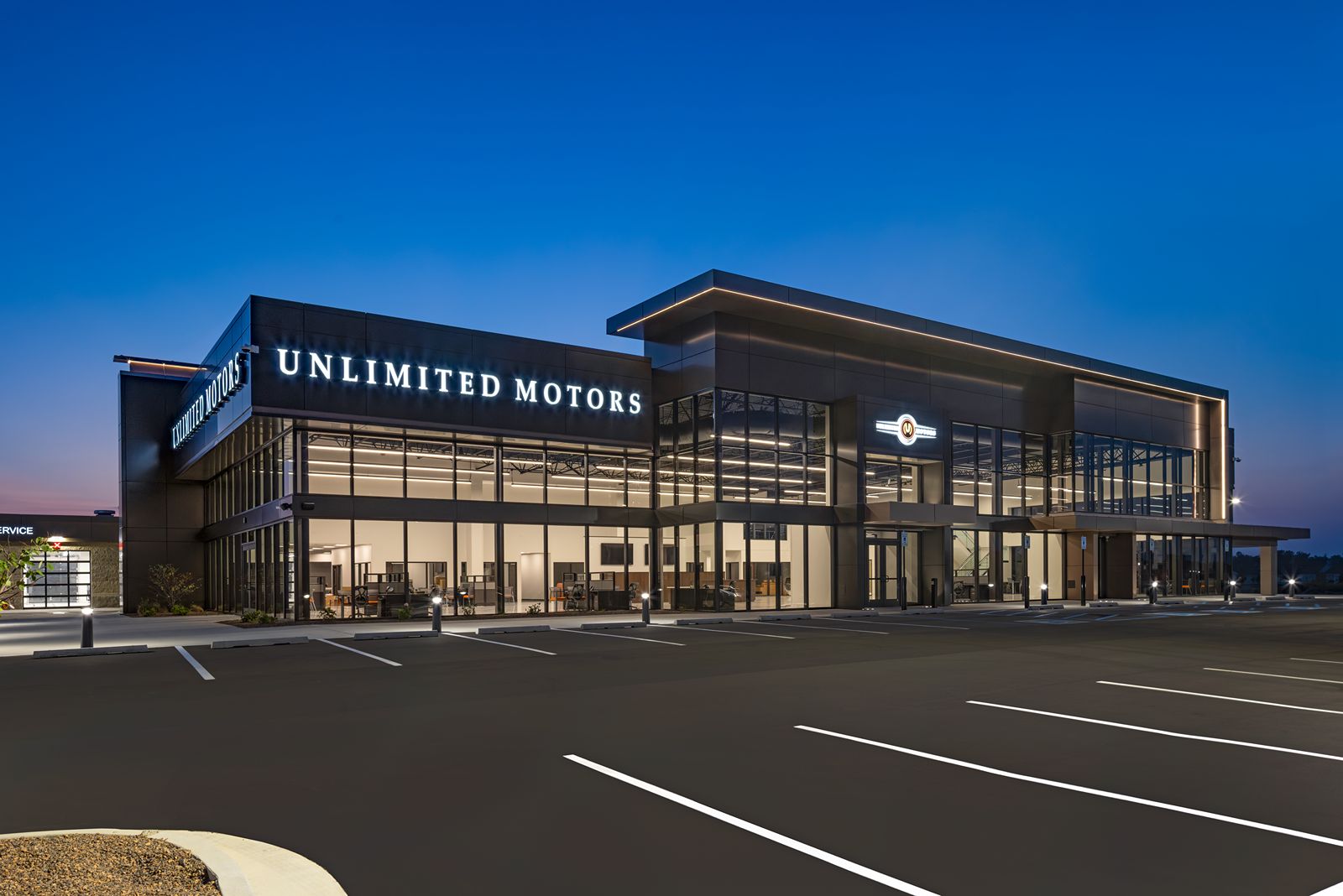
Baxter Auto Group, operating Toyota, Honda, Hyundai, VW, and other franchises across the Omaha and Lincoln markets, manages one of the Midwest's most complete automotive retail portfolios from facilities that face Nebraska's full range of roofing challenges: hail from the Great Plains storm track, straight-line winds that exceed design assumptions in severe weather years, winter snow loads that must be engineered into every structural decision, and summer heat extremes that drive the performance requirements for membrane materials. Re-roofing a Baxter facility requires addressing all of these simultaneously, in an operations environment where every service appointment that is missed is a documented loss.
Nebraska's hail environment makes Class 4 impact-resistant membrane specification the only defensible choice for Omaha dealership roofs. Baxter's facilities have experienced multiple hail events over the years, and the group's facilities team has accumulated a detailed history of which buildings held up and which required emergency repairs after major storms. That institutional knowledge has shaped their specification standards: Baxter expects Class 4 rated systems with documented test certification on every re-roof project, and they require that the certification be manufacturer-provided, not contractor-represented. We provide factory-issued test certifications for every product we specify on Baxter projects.
Showroom glass transitions on Baxter's import franchise buildings are typically more complex than on domestic brand buildings because import brands have historically specified larger glass-to-roof ratios and more architectural metal panel integration than their domestic counterparts. The Baxter Toyota and Honda facilities on the Dodge Street corridor have glass curtain walls that extend to the parapet line, creating transitions that require careful membrane termination, flexible counter-flashing, and expansion joint treatment at regular intervals along the wall. We design these transitions to accommodate the thermal movement range of Nebraska's climate — from minus-20°F in a severe winter to 105°F on a July afternoon.
Service department throughput protection is an operational commitment we make to Baxter in writing. Baxter's service departments are appointment-based, capacity-constrained operations where a lost service lane day translates directly to lost warranty reimbursement and maintenance revenue. Our Omaha service building re-roof protocol maintains 100 percent bay capacity throughout all project phases by scheduling overhead work during the two-hour window before the service lane opens each morning and using temporary protection systems over any bay where overhead work is active. If weather or crew availability prevents completing a bay close-out in that window, we do not open that bay section the following day.
Standing-seam metal is used on several of Baxter's service building sections in Omaha, particularly the older facilities that were built with metal roofing as the original system. Where standing-seam is the existing system and the structural framing is sound, we typically recommend a seam-cap retrofit rather than a full replacement: a new seam profile is mechanically attached over the existing standing seams, continuous insulation is installed in the resulting cavity, and the system provides improved thermal performance and a new concealed-fastener membrane without a complete tear-off. This approach reduces project cost and waste while delivering a warranted system.
Nebraska does not require a statewide contractor license for commercial roofing, but Omaha requires a commercial contractor's registration and a building permit for all commercial re-roofing. Baxter's institutional procurement standards require current registration, insurance, and bonding verification before project award. We are registered in Omaha and maintain the documentation package that Baxter's procurement team requires as a standard submission, not a special request.
Drainage design for Omaha dealerships must handle both the spring and summer convective storm events and the snowmelt scenario. A large Baxter campus on Dodge Street generates significant runoff volumes during both scenarios, and the drainage system must handle both without backing water up to the membrane surface or onto the vehicle lot. We size all drainage for the 25-year storm event and install overflow scuppers at all interior roof sections, and we size gutters to carry design flows without surcharging even when partially blocked by debris.
Warranty management for a multi-site dealer group like Baxter benefits from a systematic approach that Baxter's facilities director and our project management team maintain jointly. We provide a warranty register at the conclusion of each project that identifies registration numbers, coverage terms, warranty service contacts, and the maintenance obligations that must be met to keep each warranty in force. Baxter's facilities team uses this register for proactive maintenance scheduling and for insurance documentation purposes.
Omaha's auto market is stable and growing, supported by the city's diversified economy and its role as the regional commercial center for a wide geography. Baxter's multi-brand presence positions it to capture the full range of that market, and the facilities that support each franchise must meet brand standards that are increasingly specific about physical plant quality. A well-specified, properly documented roof system is a component of brand standard compliance at every franchise in Baxter's portfolio.
- What hail certification does Baxter require for Omaha dealership re-roofing?
- Baxter requires Class 4 impact-resistant rated systems with manufacturer-issued test certifications. We provide factory-issued documentation for every product we specify on Baxter projects, not contractor-represented summaries.
- How do you detail showroom glass transitions for Nebraska's full temperature range?
- We design transitions with flexible counter-flashings and expansion joints at regular intervals along curtain wall runs, accommodating the full thermal movement range from minus-20°F in severe winter conditions to 105°F on a July afternoon.
- What is a seam-cap retrofit and when is it appropriate for Omaha service buildings?
- A seam-cap retrofit installs a new concealed-fastener metal profile over existing standing seams with continuous insulation in the resulting cavity, delivering a warranted system and improved thermal performance without complete tear-off. It is appropriate when the existing structural framing is sound and tear-off waste avoidance is a priority.
- How do you size drainage for both storm events and snowmelt on Omaha dealerships?
- We calculate peak flows for both the 25-year storm event and the spring snowmelt scenario, use the larger of the two as the design condition, and install overflow scuppers at all interior sections as emergency backup capacity.
- What permits are required for Omaha dealership roofing?
- Omaha requires a commercial contractor's registration and a building permit for all commercial re-roofing. We manage all permit applications and inspections and provide completed documentation to Baxter's facilities team at project close.
Frequently asked questions
My BUR roof is 30 years old. Should I recover or replace it?
Age alone does not determine the answer — insulation condition and ply integrity do. A 30-year BUR with dry insulation and intact plies is a strong candidate for modified bitumen cap sheet recover. A 30-year BUR with saturated insulation across large areas needs replacement. We pull moisture cores to give you the actual answer, not the one that sells the most work.
How long does BUR repair typically take on a Downtown Omaha building?
Targeted BUR repair — flashing replacement at parapets and penetrations, blister repair, crack routing and fill — typically runs 2-5 days for a 20,000-30,000 sq ft roof. Full recover with modified bitumen cap sheet runs 1-2 weeks for the same footprint. Access and permitting on Downtown Omaha buildings (crane, lane closure, parking permit) can add pre-mobilization time of 2-3 weeks.
Can you repair a BUR roof in Omaha winter?
Hot-mopped BUR and torch-applied modified bitumen require substrate temperatures above 40°F for proper adhesion. Cold-applied bituminous repair products can be applied at lower temperatures. Emergency temporary repairs — stopping an active leak — can be done with cold-applied materials in any weather. Permanent BUR repair and recover is scheduled for April through October in most years.
BUR inspection or scope for your Omaha building?
We will walk the roof, pull cores where the condition warrants it, and deliver a written condition report with a repair, recover, or replace recommendation — and the reasoning behind it.
Ready to talk through a roof?
Tell us about the building and the roof problem. We'll document it and put a plan in writing — with an honest repair-vs-replace recommendation and no upsell pressure.