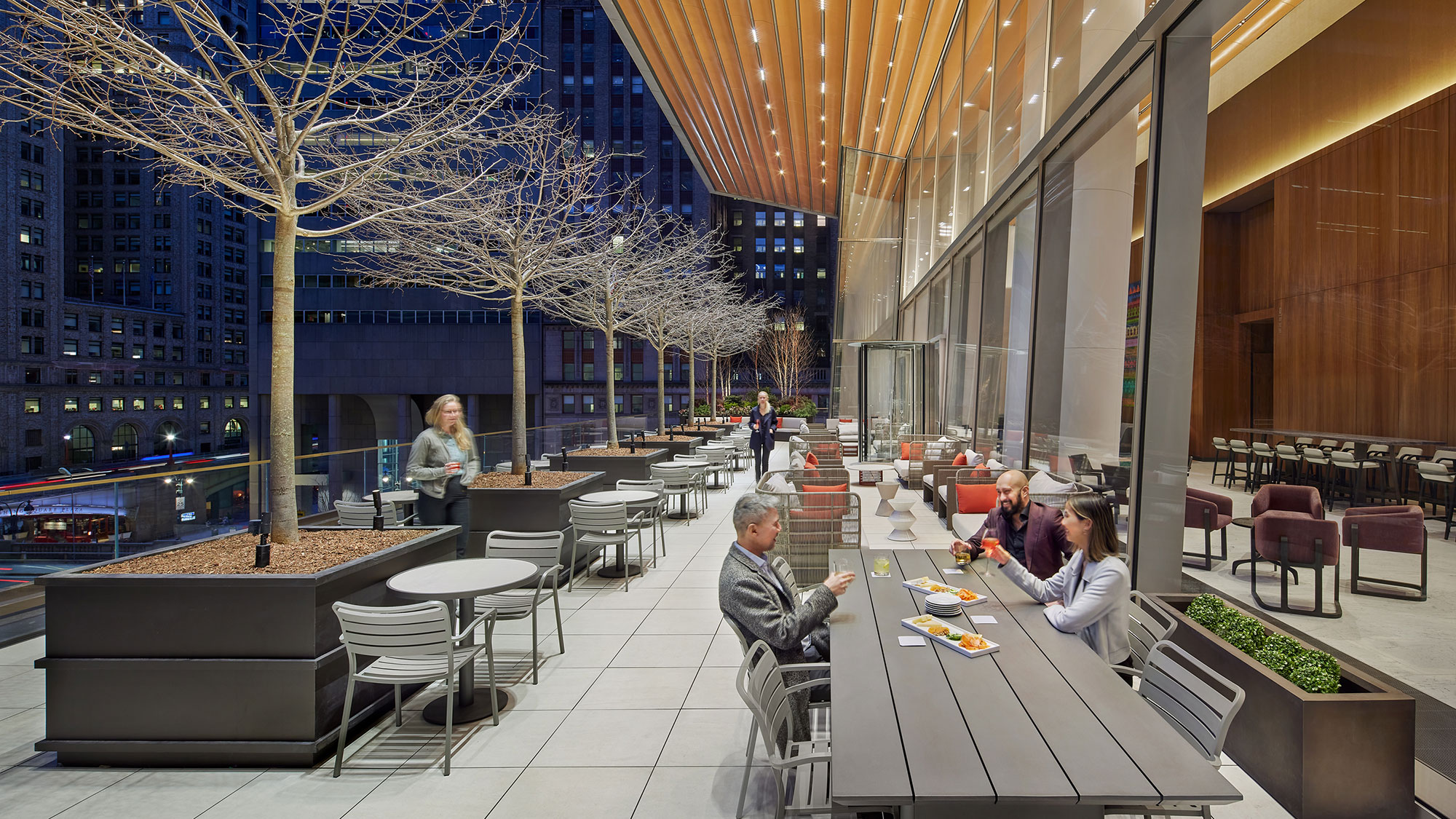
A mixed-use building is really several buildings stacked together, and the roofing reflects that. Ground-floor shops and restaurants, apartments or offices above, a structured garage tucked into the base, maybe a courtyard or rooftop terrace where residents gather — each use sits at a different level, runs on a different schedule, and fails differently if water gets in. Omaha has been building these in volume: the Blackstone District redevelopment along Farnam, the residential mid-rises in Aksarben Village, the loft conversions and infill projects in the Old Market and around the Capitol District downtown, and the newer wrap-style apartment-over-retail buildings going up along Dodge and out west. We treat each of those as a coordinated set of roof and waterproofing systems rather than one flat plane.
The most important distinction on these jobs is the one owners most often miss: a roof and a waterproofing deck are not the same product, and using one where the other belongs is how mixed-use buildings spring leaks into occupied space. The exposed low-slope roof over the top floor is a roofing problem. The deck between a garage or shops at grade and the residences above — the podium — is a waterproofing problem, and so is any plaza, courtyard, or amenity terrace that people stand on. Those decks carry pedestrian or even vehicle traffic, hold planters with soil and roots, and sit under constant water exposure with occupied space directly below, so they need a traffic-bearing waterproofing assembly, not a single-ply roof membrane.
Three different systems on one building
On a typical Omaha mixed-use project we are usually specifying and coordinating several assemblies at once. The exposed upper roof over the residential or office floors gets a conventional low-slope system — commonly a 60-mil TPO or PVC over tapered polyiso, sloped to internal drains and detailed at the parapets, the mechanical penthouse, the elevator overrun, and the stair bulkheads. The podium deck over the garage or retail gets a hot- or cold-applied waterproofing membrane with a protection course and drainage composite above it, root barriers wherever there is landscaping, and a wearing surface — pavers, topping slab, or traffic coating — chosen for how that deck is used. Rooftop amenity terraces get the same traffic-bearing logic under their finish, because a leak there drips straight into the apartment ceiling below it.
Coordinating the warranty across all of it
Where mixed-use roofing gets genuinely tricky is the warranty. Different assemblies often come from different manufacturers, and the seams where they meet — roof to wall, podium to foundation, terrace to parapet — are exactly where responsibility blurs and leaks start. We work the transitions deliberately so each system terminates into the next in a way the manufacturers will stand behind, and we register the warranties so the owner ends up with coverage that actually overlaps at the joints instead of leaving a gap nobody owns. On a building where a single drip can damage three floors of finished residential space, that coordination is the whole job, not a detail.
Building over occupied retail and residents
Most of this work happens on or over occupied space, and Omaha's urban core adds noise-ordinance hours and tight street access on top of that. We phase the work so loud demolition is sequenced away from the most sensitive hours, run dust and debris containment over the retail entrances and sidewalks below, and coordinate elevator and common-area access with building management so residents and shop tenants aren't cut off. We do not leave a deck open over occupied units overnight — each section is confirmed watertight in writing before the crew demobilizes for the day.
Working inside the project team
New mixed-use construction and gut renovations run through a general contractor, an MEP team, a structural engineer, and frequently a building-envelope consultant, and the roofing scope answers to all of them. We work inside that structure: producing submittals for architect review, getting the manufacturer's technical approval on the specified assemblies, building and testing mock-ups where the spec calls for them, and supporting the manufacturer's inspections at the critical phases through to an NDL warranty at closeout. On adaptive-reuse projects like the Old Market and Blackstone conversions, we also assess what the original structure can carry before we add weight, since century-old buildings rarely have the load capacity assumptions a new podium does.
Mixed-Use Development Roofing Questions
A roof membrane is built for low-slope drainage and occasional maintenance foot traffic. A podium or amenity deck carries pedestrian or vehicle loads, holds planters with soil and roots, sits under constant water exposure, and has occupied space directly beneath it. That calls for a traffic-bearing waterproofing assembly with a protection course, drainage layer, and root barrier — putting a single-ply roof there typically fails within a few years and leaks into the floor below.
Different assemblies on a mixed-use building often come from different manufacturers, and the transitions where they meet are where coverage blurs. We detail each system to terminate into the next in a manner the manufacturers will warrant, then register the warranties so they overlap at the joints rather than leaving an uncovered gap — critical when one leak can damage several floors of finished residential space.
Yes. Rooftop terraces and courtyards common on Omaha mid-rises need a traffic-bearing waterproofing assembly beneath their finish surface, not a standard roof. We specify, install, and warranty those decks in coordination with the deck-finish contractor and the structural engineer of record, since a leak there drains straight into the unit below.
Yes — it is most of what mixed-use roofing involves. We phase the work to keep loud demolition out of the most sensitive hours, contain dust and debris over retail entrances and sidewalks, coordinate elevator and common-area access with building management, and confirm each section watertight in writing before leaving each day. We never leave a deck open over occupied units overnight.
Developers, lenders, and design teams generally require architect-reviewed submittals, manufacturer technical approval of the specified assemblies, mock-up testing where called for, quality-control inspection reports, manufacturer inspections at critical phases, and NDL warranty registration at closeout. We work inside that submittal and QC framework alongside the GC, MEP trades, structural engineer, and envelope consultant from preconstruction through final inspection.
Ready to talk through a roof?
Tell us about the building and the roof problem. We'll document it and put a plan in writing — with an honest repair-vs-replace recommendation and no upsell pressure.