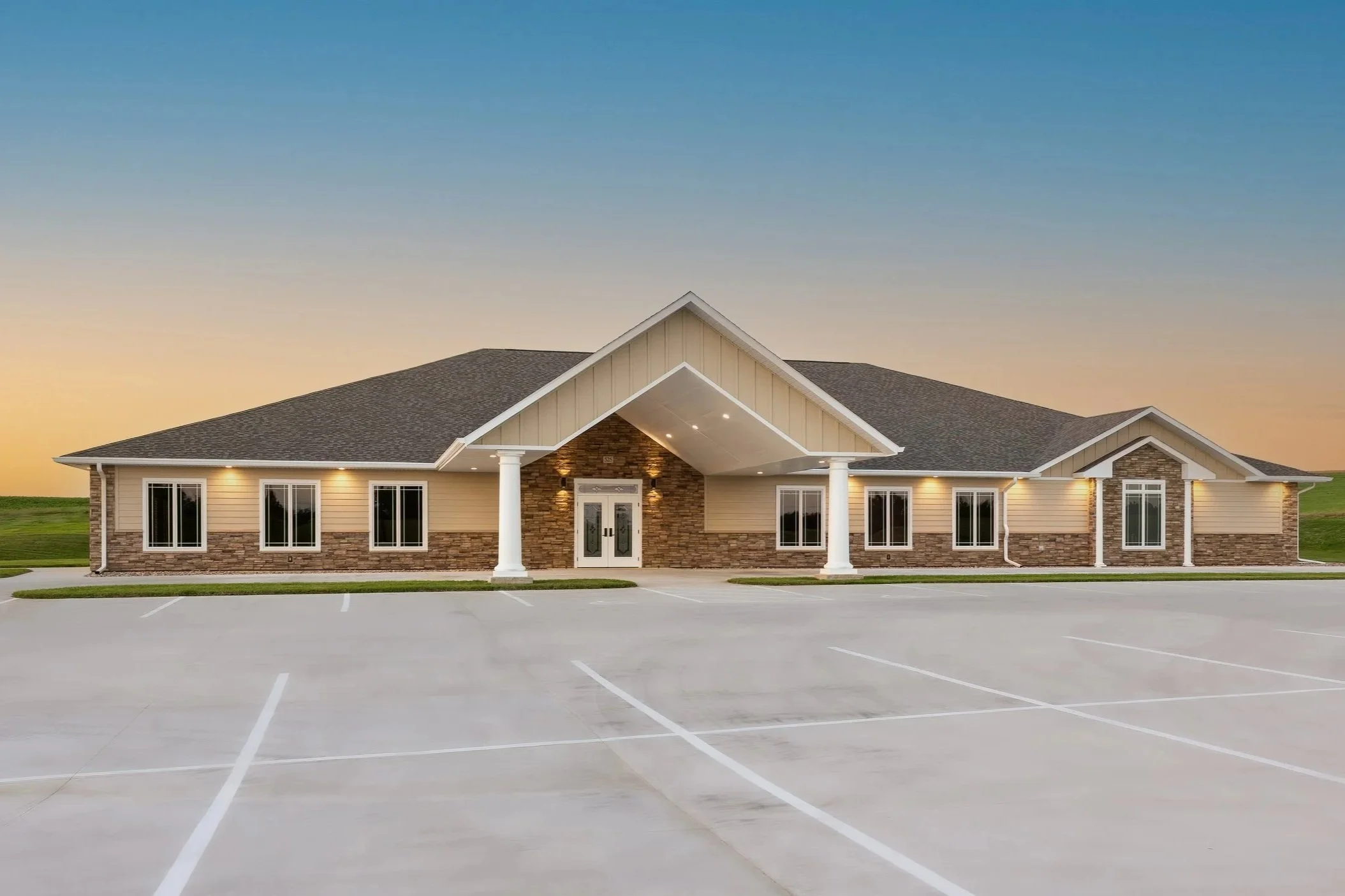
Most of our clients want a roof that performs. A funeral home needs one that performs and disappears — no banging hammers over a family saying goodbye, no dumpster fronting the entrance during a visitation, no scaffolding spoiling a building that is supposed to feel calm and dignified the moment a family pulls into the lot. That second requirement is the whole job here, and it shapes how we plan, staff, and sequence every funeral home roof we touch across Omaha, from the long-established firms in Dundee and along the older Dodge and Maple corridors to the newer chapels out in Millard, Papillion, and West Omaha.
The Calendar Belongs to the Family, Not the Crew
A funeral home is never really closed. Visitations run into the evening, services land on short notice, and the building has to look and feel composed whenever a family arrives. So we don't set the schedule and ask the director to live with it — we take the director's calendar and build our work around it. We get advance notice of services and visitations, keep the loud, disruptive phases off the hours when families are present, and stay out of the entrance, the chapel, and the visitation rooms during those times. Staging, the dumpster, and the material hoist go where mourners don't see them, not by the front canopy. And every day's work is closed in watertight before the building opens for an evening visitation, because the one thing worse than construction during a service is a leak during one.
Quiet, Clean, and Composed on Site
Dignity on a funeral home project is mostly about discretion. Our crews keep the noise down and the language professional, keep the site tidy through the day rather than at the end of it, and understand where they are. The finished roof matters too: visible edge metal, fascia, and coping read as part of the building's face, so we hold clean lines and consistent detailing on anything that can be seen from the lot or the street. A funeral home roof shouldn't just stop leaking — it should look like it belongs on a building families trust.
The Prep Room Exhaust Stays Running
Behind the public rooms, the embalming and preparation area runs under negative pressure with a rooftop exhaust that pulls formaldehyde and other chemical vapor out of the building. That exhaust is a health-and-safety requirement, and it cannot go dark for our convenience. We locate the prep-room exhaust stack before mobilizing, treat the flashing around it as its own scope item handled with the director's sign-off, and keep the exhaust running while we work near it. The stack is never capped, blocked, or shut down to make a flashing detail easier — we build the detail around a stack that stays in service.
Chapel Spans and Older Decks
Many funeral homes carry a chapel or visitation room that opens up into a 40-to-60-foot clear span, much like a small church sanctuary — no interior columns, and a roof that flexes and faces real wind uplift across that open structure. We evaluate the deck type, the span, and the existing attachment, then specify the fastening and membrane for those actual loads rather than a generic pattern; long-span steel and wood decks each need their own pull-out testing or structural confirmation. The other reality on Omaha's older funeral homes is what hides under a tired-looking roof. Built-up systems on wood or concrete decks often conceal wet, failed insulation beneath a surface that still looks serviceable, so we core-sample and run a moisture survey before any recover decision — re-covering over a soaked deck only buries the problem and the cost.
The Porte-Cochere Is Usually Where It Leaks
The covered drive where families are received — the porte-cochere or entry canopy — is both the most visible part of the building and one of the most common chronic leak points we find. The joint where that canopy ties back to the main wall, and the canopy's own drains and downspouts, tend to fail quietly on older facilities and drip right over the spot where mourners step out of the car. We inspect those transitions and drainage connections on every funeral home assessment and price them as their own line items, because a stained, dripping entry canopy undercuts the dignified impression the whole building is meant to give.
Materials and Drainage
For a low-slope funeral home roof we typically specify 60-mil TPO over tapered polyiso. The taper corrects the drainage shortfalls common on older buildings and clears the ponding water that ages an under-drained roof prematurely. On a wood-decked chapel we confirm the load capacity before settling on insulation thickness. Hail rides through Douglas County most spring storm seasons, and where a roof has taken storm damage we document it thoroughly and work with the owner's insurer so a funded replacement is handled cleanly. Whether the building is a family firm passed down for generations or part of a regional group managed at the corporate level, the approach is the same: discreet, well-documented, and respectful of what the building is for.
Funeral Home & Mortuary Roofing Questions
We work off your calendar, not ours. With advance notice of services and visitations, we keep the loud, disruptive phases off those hours and stay clear of the entrance, chapel, and visitation rooms while families are present. Staging and the dumpster go out of sight of mourners, and every day's work is closed in watertight before an evening visitation — composure on site is part of the job, not an extra.
It keeps running. The prep-room exhaust handles formaldehyde and chemical vapor under negative pressure and can't be shut off for our convenience, so we locate the stack before mobilizing, flash around it as its own scope item with the director's sign-off, and keep it in service while we work nearby. It's never capped, blocked, or taken offline to make a detail easier.
Yes. A 40-to-60-foot clear-span chapel behaves like a small sanctuary roof — it flexes and faces real wind uplift — so we evaluate the deck, span, and existing attachment and engineer the fastening and membrane to those loads. Long-span steel and wood decks each get their own pull-out testing or structural confirmation rather than a one-size pattern.
Only if it's actually dry underneath, and on older funeral homes it often isn't. Built-up roofs on wood or concrete decks frequently hide wet, failed insulation under a surface that still looks fine, so we core-sample and run a moisture survey first. Recovering over a soaked deck buries the problem and the cost — we'd rather know what's up there before recommending the cheaper path.
Yes, and it's often where the real leak is. The joint where the porte-cochere ties to the building and the canopy's own drains tend to fail quietly and drip right over where families are received. We inspect those transitions and drainage connections on every assessment and price them as their own line items, because a stained, dripping entry canopy works against everything the building is meant to convey.
Ready to talk through a roof?
Tell us about the building and the roof problem. We'll document it and put a plan in writing — with an honest repair-vs-replace recommendation and no upsell pressure.