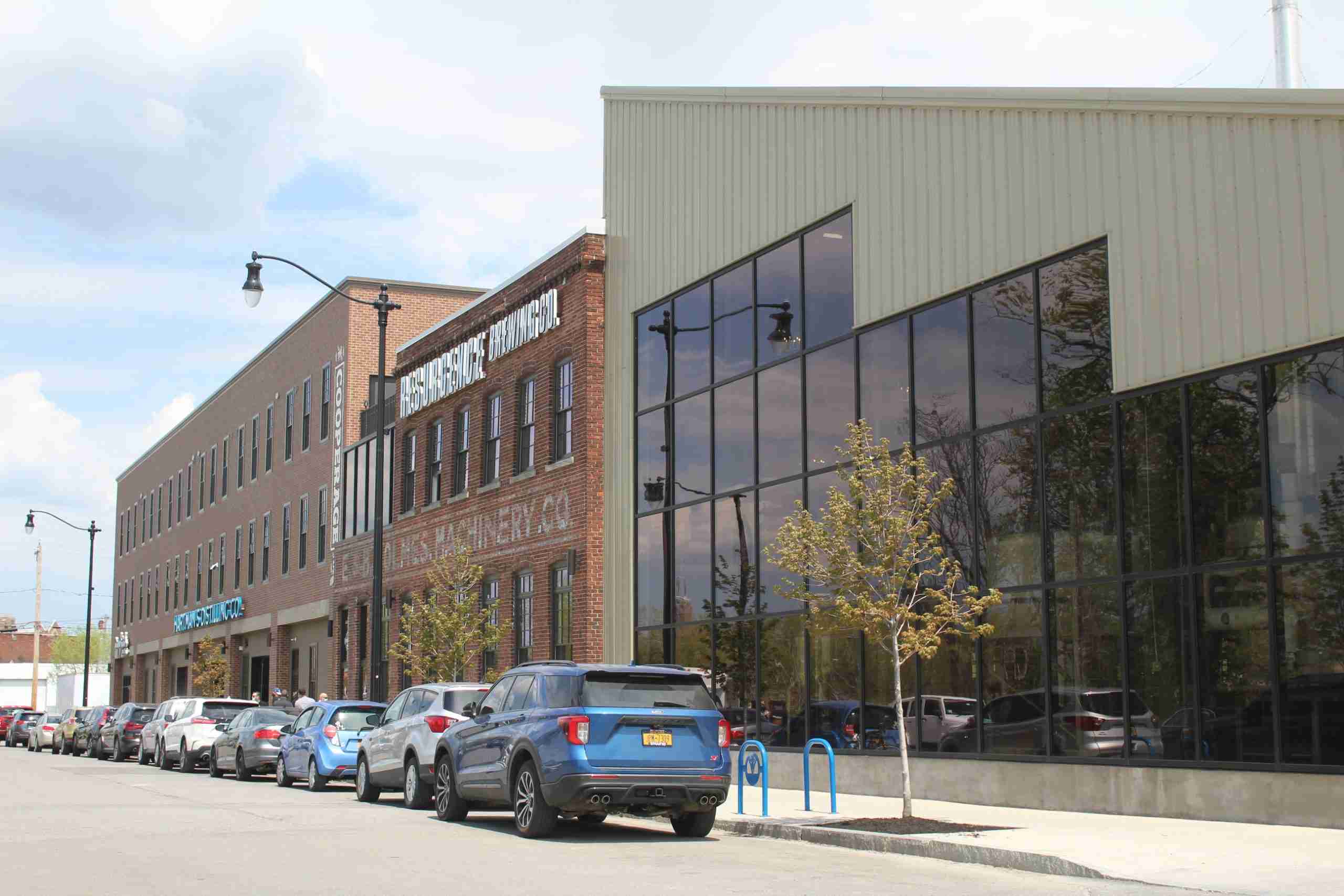
Omaha's commercial corridors span the I-80 and I-29 industrial belts, the Aksarben Village and Midtown Crossing redevelopment zones, the 180th Street and Dodge Street retail belts, and the Papillion and La Vista employment areas. Breweries, distilleries, and food and beverage production facilities in this market generate interior humidity and CO₂ loads that make vapor control design a critical specification decision — not an afterthought — and require roofing contractors who have worked in production environments and understand how to coordinate around active fermentation and distillation schedules.
Property Type Food Processing Facility Roofing in Omaha, NE Omaha's commercial corridors span the I-80 and I-29 industrial belts, the Aksarben Village and Midtown Crossing redevelopment zones, the 180th Street and Dodge Street retail belts, and the Papillion and La Vista employment areas.
The ROI case for brewery and distillery roofing in Omaha is sharper than for most building types because production continuity is the business. A craft beverage operation that loses a production week to a roofing-related building issue — water damage, a failed HVAC system caused by a leaking exhaust penetration, a forced production halt for emergency repairs — loses revenue that can't be recovered. Batch production doesn't compress to make up for lost days. The cost of a correctly specified, properly maintained roof system over a 20-year horizon is a small fraction of the production revenue it protects.
Energy efficiency is a meaningful operational benefit of re-roofing for production breweries and distilleries in Omaha. Production buildings with high-humidity interior conditions run HVAC systems continuously to manage the building environment. Wet, degraded insulation in the existing roof assembly — which is almost universal in older production facility re-roofs — reduces effective R-value substantially. A new insulation assembly with correctly specified vapor control can reduce the HVAC energy load by 15-25% in a production facility, with measurable monthly savings that contribute to payback on the re-roofing investment.
Taproom operations at craft beverage producers in Omaha add a customer-facing dimension to the roofing investment decision. A taproom with a leaking roof, visible water stains, or audible emergency repair work during service hours creates an impression problem that affects brand reputation and repeat customer behavior. A brewery that re-roofs proactively — before problems become visible — protects its hospitality investment alongside its production investment. We've seen owners delay re-roofing decisions until taproom water damage became a social media moment. Don't be that brewery.
Brewery & Distillery Roofing — ROI Questions
A production brewery in Omaha with degraded roof insulation — wet polyiso running at 50-60% of rated R-value — pays a continuous energy premium to maintain production temperature and humidity conditions. A new insulation assembly at full design R-value reduces the HVAC cooling and dehumidification load. In our experience with production facility re-roofs, improved insulation performance reduces HVAC energy cost by 12-20% annually in humid production environments. A 20-year NPV calculation of those savings typically covers 30-50% of the re-roofing project cost.
Risk exposure depends on the severity of the failure and what production was active. A minor leak over a packaging line that contaminates finished product and requires disposal is a recoverable event at moderate cost. A catastrophic penetration over active fermentation vessels that requires emergency production halt, contaminated batch disposal, vessel sanitization, and a 2-week restart cycle is a 6-figure event for a mid-scale production brewery. The risk isn't uniform — but it's real and it's measurable. We can help calculate the exposure for your specific production scale.
Production facilities are valued on their ability to produce. A facility with deferred roof maintenance has two negative valuation effects: the immediate capital expenditure liability (the cost of the deferred re-roofing), and the operational risk discount (buyers and investors apply a risk premium to facilities with uncertain building conditions). A facility with a current, warranted roof and documented maintenance records is a cleaner asset with a lower risk premium. For craft beverage producers considering a sale or investment round, a current roof is a balance sheet item, not just a maintenance issue.
Production facility re-roofing qualifies for standard commercial real estate financing — a capital improvement loan secured by the property — as well as SBA 504 loans for qualifying small manufacturers. Some states have small manufacturer capital improvement programs with favorable rates for food and beverage producers. For leased production facilities, the landlord-tenant cost sharing conversation is a standard negotiation — we can provide the documentation package that supports a cost-sharing proposal to a landlord, including specification, condition assessment, and warranty value documentation.
Re-roof first. A taproom expansion that wraps into a building with deferred roof maintenance is building on a problem. The construction disruption and coordination are much easier to manage when the roof project and the expansion project are sequential rather than concurrent. A re-roofing project that runs concurrently with a taproom buildout creates scheduling conflicts, warranty boundary questions, and contractor coordination problems that add cost and delay to both projects. Do the roof, warranty it, then build the taproom on a sound building.
Ready to talk through a roof?
Tell us about the building and the roof problem. We'll document it and put a plan in writing — with an honest repair-vs-replace recommendation and no upsell pressure.